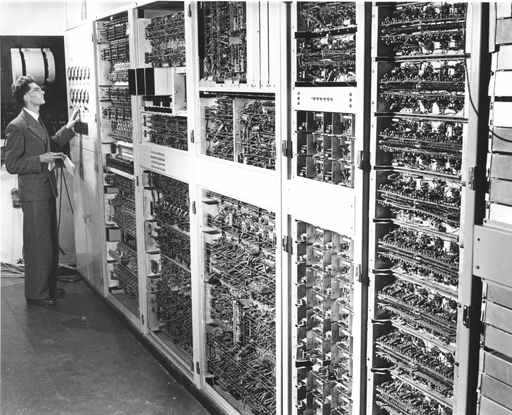
In 1997, a printer became a reader for a computer that had stopped operating in 1964. At the University of Melbourne, Jurij Semkiw and John Horvath converted an Apple printer to advance CSIRAC’s punched paper tapes. A light-detection attachment read the holes while a Toshiba laptop controlled the movement. The machine was recovering information, not printing it. [1]
Music helped prompt the work. CSIRAC had played melodies in its working years, but those performances had not been recorded as audio. What survived included programs, data tapes, circuit diagrams and people who knew how the computer had sounded and worked. Composer and researcher Paul Doornbusch’s account describes former programmer John Spencer and maintenance engineers Ron Bowles and Semkiw helping reconstruct it. [2]
Where is this place?
Scienceworks, Spotswood, Victoria — CSIRAC’s listed museum location. This map locates the town or region, not a verified exact historic event site.
The printer-and-laptop arrangement read the Melbourne music tapes. It was not a replacement sound system bolted onto CSIRAC: the recovered information was converted into files for an emulator. Music occupied only a small part of the wider tape-reading project. [1]
One Sydney music tape took another route. Museums Victoria records that it was read manually. Sprocket holes down both edges identified its Sydney origin; Melbourne tapes lacked those edge holes. Trevor Pearcey had kept the reel and donated it to the project in 1999. [3]
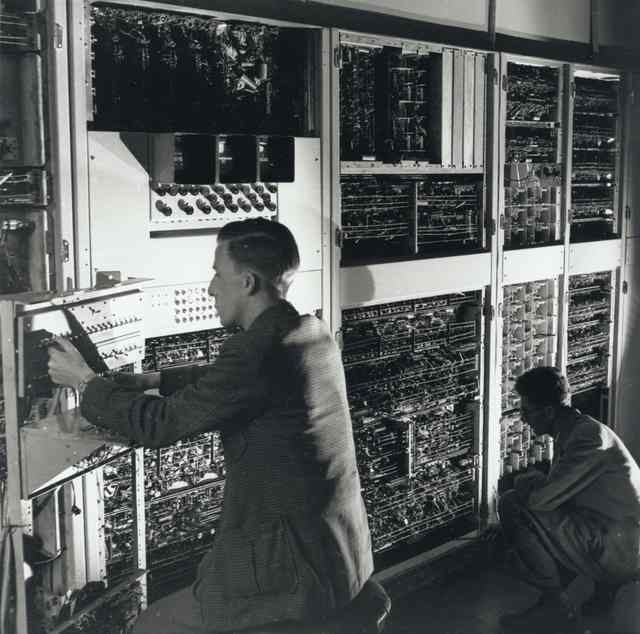
Reading the programs did not, by itself, recreate the sound. The reconstruction separated the timing of the speaker pulses from their shape. Spencer’s software supplied timing information; specially built hardware reproduced the pulse shapes. The combined signal could then be played through the original speaker and recorded. The resulting audio was a reconstruction, not a newly discovered 1950s recording. [2]
CSIRAC is now listed by Museums Victoria at Scienceworks in Spotswood, while the later archival reader is in storage. The reader’s own catalogue entry preserves a small operating detail: its test tape, T916, was to be loaded at a pencil mark. [1][4]