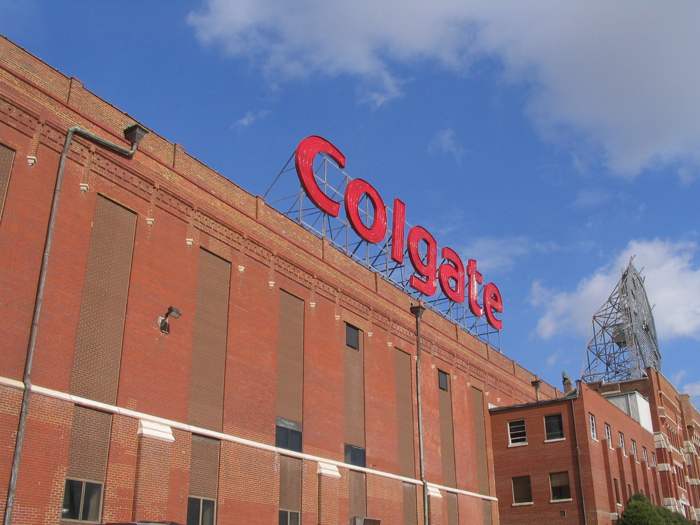
In Ken Lund’s 2006 photograph of the Colgate factory in Clarksville, Indiana, the brand is easier to read than the time. Red letters stretch above a long brick wall. At the far end, the giant clock appears from behind: a face supported by a web of steel. This view catches an advertisement and its machinery, rather than a picturesque dial.
The clock had travelled. The Indiana Historical Bureau records that Colgate brought it from New Jersey and placed it above the Clarksville factory in 1924. It was not a new timepiece made to commemorate this town. Nor was its Indiana setting a factory built on a blank site. The company had acquired former state-prison property three years earlier. [1]
Where is this place?
Colgate Clock, Clarksville, Indiana — geographic context, not a promise of access to the former factory. This map locates the town or region, not a verified exact historic event site.
Two things being used again
Jersey City Public Library’s history identifies the Indiana clock as the smaller predecessor of the Colgate clock on the Hudson waterfront. The older machine stood above a Jersey City warehouse before being replaced. Its successor was set in motion in December 1924. The familiar name therefore belongs to two different objects, not one clock appearing in photographs of different places. [2]
In Clarksville, the clock joined a more complicated inheritance. The state’s annotated historical marker distinguishes the first prison in nearby Jeffersonville, opened in 1822, from the Clarksville institution that received prisoners in 1847. The distinction matters: a familiar regional landmark can compress several locations and generations of buildings into one convenient origin story. [3]
The marker also records prisoners working in manufacturing shops on the grounds. Industrial work belonged to the site before Colgate’s arrival, but under incarceration. That is not the same history as later factory employment, and the two should not be blended into a cheerful account of a building finding new uses. After a 1918 fire, the state sold the property to Colgate in 1921. [3]
Seen together, the records change the photograph. The great brand name announces the factory’s identity; the clock and the site each carry a past that the lettering does not explain. Reuse brought an already familiar corporate object to a place with its own institutional history. It did not make either history disappear.
The name stayed more easily than the work
Production eventually moved again. Colgate-Palmolive’s 2007 annual report calls the Indiana operation its Jeffersonville plant and records the end of production there that December. Colgate Total toothpaste production transferred to Morristown, Tennessee; other production and administrative functions went elsewhere. This is the company’s account of a manufacturing change, not a record of how every worker experienced it. [4]
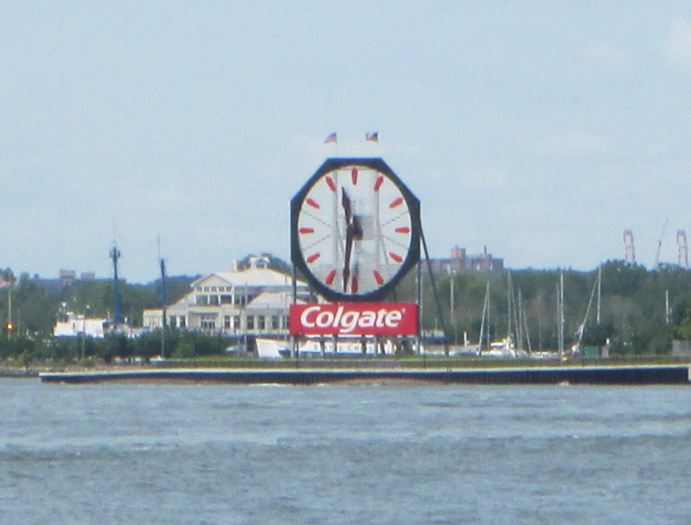
The New Jersey clock also became detached from the work it advertised. The library traces its removal from the corporate building after Colgate left Jersey City and its later move to a waterfront location in 2013. Beyond My Ken’s July 2014 photograph shows that separate clock facing the Hudson. It is not the Indiana clock returned east. [2]
In September 2026, the town reported a presentation about ClockWorks, a development planned for the former Colgate property. The announcement establishes that the site was being discussed in redevelopment plans; it does not establish that those plans had been completed. The photographs here show neither that scheme nor its outcome. [5]
A clock can survive the departure of the business whose name it carries. It can also travel far enough for one town’s replaced equipment to become another town’s recognisable landmark. Clarksville’s example asks for two acts of attention: look up at the object that arrived, then look beneath it at the place that was already there.