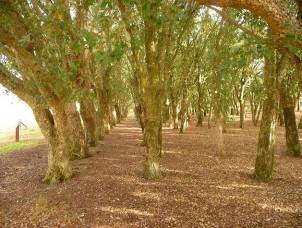
In November 2005, cork stripped from Canberra’s Glenloch plantation was sold to nurseries for growing orchids. ACT Forests had commissioned three Portuguese-Australian workers for the two-week harvest. A plantation begun as a test of commercial cork growing was supplying a quite specific customer. [1]
The crop was bark, not timber. Harvesting it without damaging the tree required specialist skill. Four years earlier, Portuguese cork strippers Manuel Silva and Manuel Graca had come to Canberra to work at the plantation; the ACT Heritage Council’s later account records the scarcity of their expertise in Australia. [2]
Where is this place?
Glenloch Cork Oak Plantation, Forest 1, National Arboretum Canberra. This map locates the town or region, not a verified exact historic event site.
The site’s industrial ambitions went back much further. Walter Burley Griffin pursued supplies of acorns and pressed horticulturist Thomas Charles Weston for updates on planting and soil conditions. Weston tried both nursery-grown seedlings and acorns sown directly into the ground. Planting began in 1917. [2]
Customers changed as the trees matured. The National Arboretum’s history records cork sent to Melbourne in 1948 to a firm making insulation blocks for refrigerator doors. Later batches went to potters and model railway enthusiasts, as well as to a manufacturer of gaskets, tiles, shoe heels and bottle stoppers. [1]
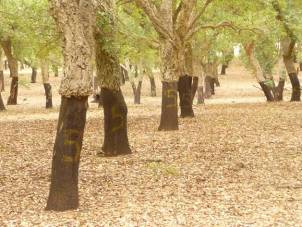
The 2014 heritage entry includes a photograph of marked trunks: its caption identifies the last digit of the harvest year, 2005. A June 2013 inspection also recorded damage where non-experts had removed cork. Those removals had been made without the land manager’s clearance. [2]