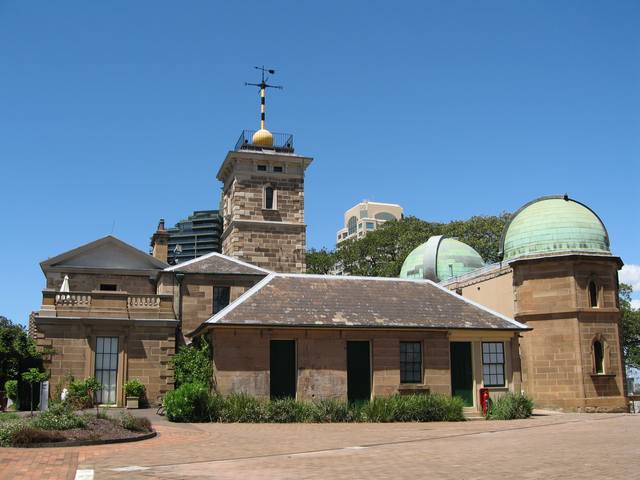
About seven litres of soapy water helped soften the descent of Sydney Observatory’s time ball. The water sat inside a cylinder as a buffer for a rubber piston connected to the ball above. Carey Ward’s notes, dated 10 March 1983 and preserved in the Powerhouse collection record, describe a drop that began quickly and finished more slowly as pressure built in the cylinder. [1]
The visible signal had originally served ships setting their navigation clocks. It first fell at noon on 5 June 1858. That schedule soon created a problem for Government Astronomer Scott: he needed to observe the sun crossing the meridian at midday, but also had to be upstairs releasing the ball. The signal moved to one o’clock. [2]
Where is this place?
Sydney Observatory, New South Wales. This map locates the town or region, not a verified exact historic event site.
Another change came with standard time. Historian of astronomy Nick Lomb records that Sydney put its clocks back five minutes on 1 February 1895. The observatory’s ball consequently fell five minutes later by the old Sydney time, without being late by the new standard. [3]
Ward’s much later equipment notes describe an electric motor lifting the ball 2.7 metres before a safety lock held it ready. A clock signal released the lock. The first roughly two metres of the fall were rapid; the cylinder slowed the remaining distance. The motor was an addition to a mechanism once raised by hand. [1]
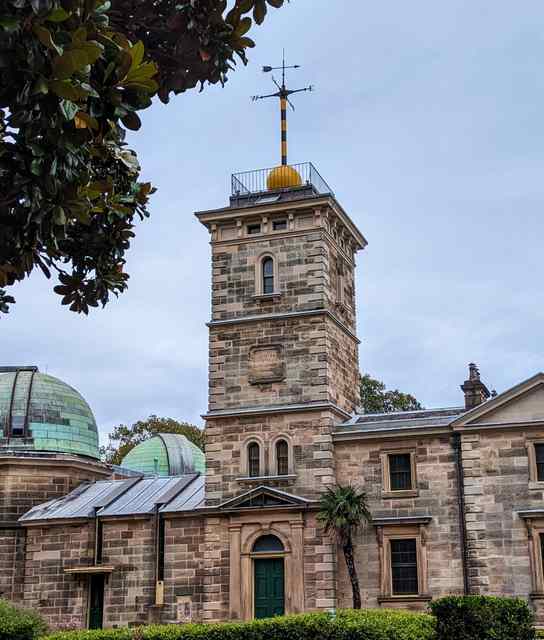
The same 1983 record lists less conspicuous work: changing the water and cleaning the piston every two months. By then, raising the ball had passed from the caretaker to the scientific instrument maker. [1]