The greenhouses came down. The chimney had another use.
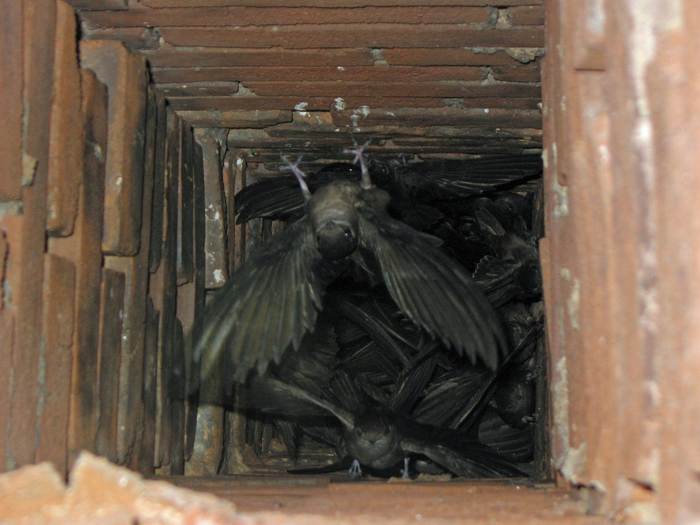
When Hamilton Conservation Authority cleared the former Veldhuis property in Dundas in early 2010, it retained a brick chimney where chimney swifts were breeding. A structure left from a plant-growing business became part of a plan to restore habitat beside the Desjardins Canal. [1]
Where is this place?
Dundas, Ontario — community orientation, not an instruction to approach a nesting structure. This map locates the town or region, not a verified exact historic event site.
That decision makes Canal Park more than a simple story of industry giving way to nature. One part of the built environment stayed because birds were already using it.
The cactus business left more than a festival
Ben and Marika Veldhuis bought the Peterson Greenhouses on King Street East in 1951. Ben’s cactus business expanded, and Dundas eventually adopted the title Cactus Capital of Canada. The conservation authority connects that history to the town’s Cactus Festival. [1]
The property later ceased growing plants commercially. HCA acquired it in 2008 for restoration. The greenhouse structures were removed, but clearing the site did not mean treating every surviving structure as waste. [1]
The distinction matters. The chimney was not simply a substitute monument erected after the business disappeared. It was an existing piece of the site that had acquired a different function.
Keeping it required work
OMC Landscape Architecture, which worked on the first phase, records that the site’s elevation was raised for remediation and flood-related reasons. Its team developed planting plans with an ecologist and conservation authority staff. The firm also identifies engineering services associated with preserving the chimney. [2]
In other words, retaining a remnant was not the same as abandoning it to decay. The park’s new landscape involved grading, planting and decisions about what could remain within it. OMC’s account places the chimney alongside the practical work of turning the property into a public space. [2]
A project-background report in HCA’s November 2018 board package makes the intervention still clearer. Among the work already completed, it lists structural restoration and salvage of the chimney, which had been found to house chimney swifts. [3]
That wording describes something more active than merely stopping a demolition crew. The structure needed to be carried into the new use of the land.
An opening was not the end of the project
The same report explains why the park’s viewing platform took longer. Its foundation had been constructed in late 2013 and early 2014, but funding limited the work. The unfinished foundation was protected from public use while money was sought for the deck above it. [3]
The park opened under its new name in 2016. By the 2018 report, additional fundraising had made the remaining work possible. HCA’s later account records the viewing platform and shade structure being unveiled in 2019. [1,3]
These were separate milestones, not one instant conversion from abandoned greenhouses to finished park.
A cavity is habitat, too
The federal government’s 2023 recovery strategy explains why a chimney can matter to this species. Chimney swifts cling to vertical surfaces inside cavities such as hollow trees and chimneys. Modification or demolition can remove a place they use for nesting or roosting. [4]
That does not establish how many birds have used the Dundas chimney, or whether it is occupied on a particular day. The local records establish the reason for retaining it; they are not a current bird census.
Canal Park’s transformation involved introducing new plants and facilities. It also involved recognizing a use that did not need to be invented. The greenhouse business had ended, but the chimney was not finished.