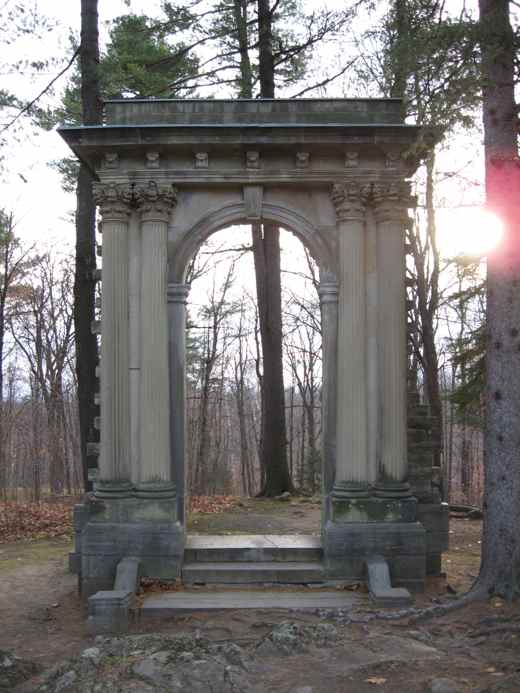
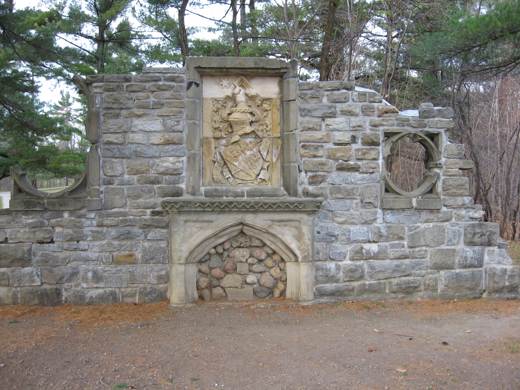
The transformation starts at a stone wall: one hand against the stone, the other over the heart. Seven heartbeats, then a clap. In the National Capital Commission’s activity booklet for the Mackenzie King Estate, the child is now playing Pat, the former prime minister’s dog. [1]
King expanded this estate in Chelsea, Quebec, between 1903 and 1950, creating gardens and a collection of ruins. He left it to the people of Canada. [2]
Where is this place?
Mackenzie King Estate, Chelsea, Quebec. This map locates the town or region, not a verified exact historic event site.
The booklet’s map names the Abbey Ruins, Arc de Triomphe and Window on the Forest separately. The map also supplies a reason to stay off the stone walls: the Murphy brothers worked hard to build them, and stones might come loose. Pat’s supposed care for the walls becomes a rule for the visiting child. [1]
At the Moorside gardens, old photographs become a matching exercise. Children are asked to find the viewpoints and make new pictures: they play Pat; their companions play the humans. [1]
Another clap ends the roleplay. The last page has a diploma, with spaces for the adventurer’s name and a park representative’s signature. [1]