A trail at Devils Postpile was moved to protect something less conspicuous than its towering columns. Bill Kuhn and Terressa Whitaker’s 2014 condition assessment records that a maintained trail and some informal paths had been rerouted to spare areas of glacial polish. The concern was the rock’s surface, not only whether the columns remained standing. [1]
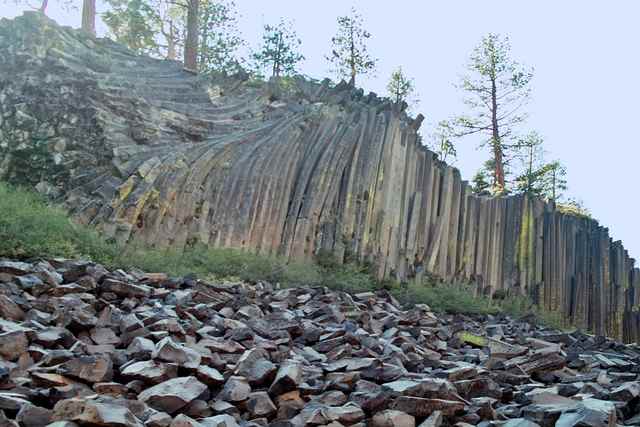
The sides and tops preserve different stages of the formation’s history. About 80,000 years ago, lava pooled in the San Joaquin valley. Cooling and contraction opened cracks from above and below, dividing the rock into columns. Later ice eroded the flow, leaving exposed column tops with fine polish and parallel grooves. The polygonal outlines came from cooling; the surface finish records subsequent glaciation. [2]
Where is this place?
Devils Postpile National Monument, California. This map locates the town or region, not a verified exact historic event site.
Footwear was a suspected source of later change, not a measured explanation for every smooth patch. Kuhn and Whitaker, working with information available through 2009 or 2010, described the evidence of visitor wear as anecdotal. Repeat photographs had supported visual comparisons, but there were no quantitative monitoring data to confirm the suspected effect. They called for reference conditions against which future changes could be compared. [1]
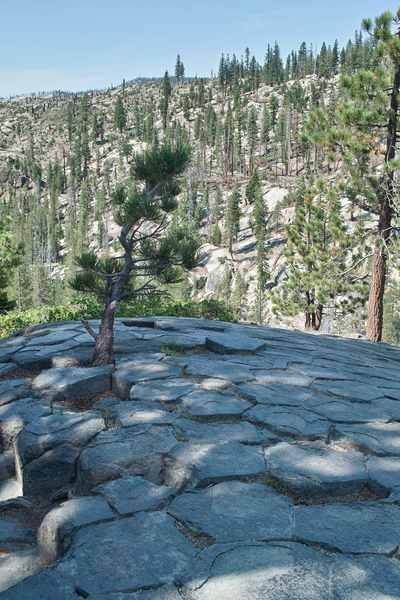
Nor did their assessment describe a ruined monument. It rated the geological resources overall as being in excellent condition, with very minor exceptions from direct impacts. Protecting the polish meant attending to a small part of that larger landscape. [1]
Below the column faces, another process leaves much larger pieces. The US Geological Survey describes earthquakes and repeated freezing and thawing as causes of falling columns: water enlarges cracks over time, and broken sections collect in the talus at the base. [2]