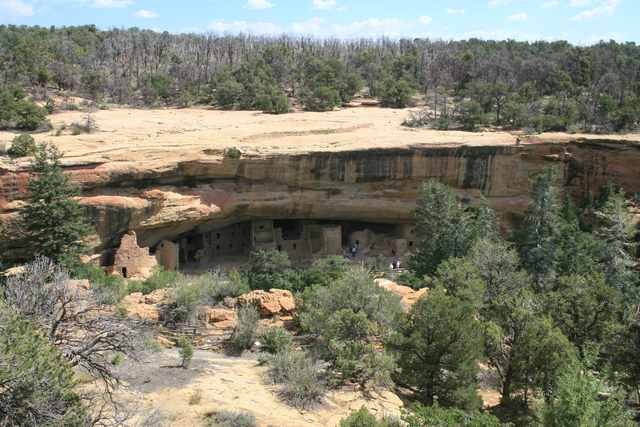
In November 2015, National Park Service climbers examined the crack system over Spruce Tree House and removed loose rock. The crew drew staff from Chiricahua, Rocky Mountain, and Arches/Canyonlands. Their work did not settle the problem: further rock-fall concerns kept the Mesa Verde cliff dwelling closed. [2]
Earlier repairs were part of the investigation. Stabilization in the 1940s and 1960s had affected the natural settling of the sandstone arch. The park’s account describes a study sequence combining laser surveys, geological information and computer models of both the original arch and the later interventions. [2]
Where is this place?
Spruce Tree House, Mesa Verde, Colorado. This map locates the town or region, not a verified exact historic event site.
The plan selected in February 2024 called for up to 75 tensioned rockbolts, each 20 feet long, arranged in a network through the arch. It excluded stabilization of the Ancestral Pueblo buildings themselves; temporary protection would shield them during construction. [1]
Mortar matching the sandstone’s color and texture would cover the completed bolts. Small reinforced-concrete supports would tuck beneath hanging rock blocks. Instruments would send monitoring data back to park headquarters. The proposed work extended well beyond removing another batch of loose stones. [1]
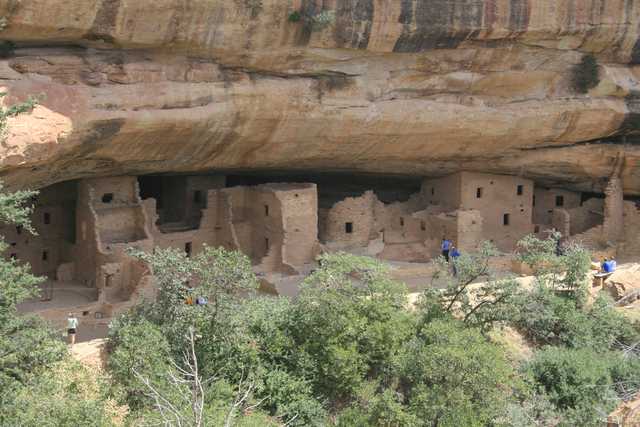
Consultation did not produce a single view of preservation. The decision records a Hopi representative acknowledging the NPS’s preservation mission while distinguishing it from the traditional Hopi understanding that things have a finite existence. [1]
The September 2026 conditions notice still listed Spruce Tree House as closed because of rock-fall danger, with stabilization work intended to permit reopening. Visitors were directed to overlooks behind the museum. [3]