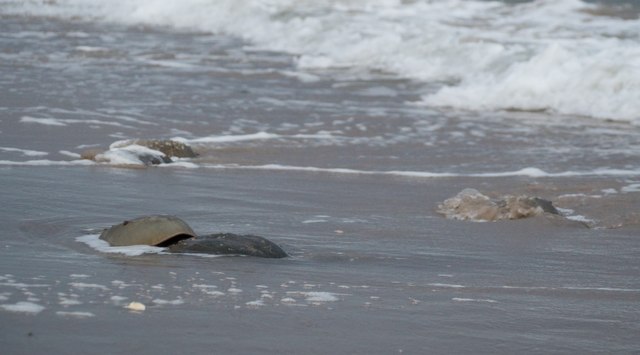
At Dead Horse Bay, a horseshoe-crab count ran until 12:30 a.m. The volunteers had found 2,200 crabs on the night of 31 May 2018, according to conservation biologist Kaitlyn Parkins’s season recap for NYC Audubon, now NYC Bird Alliance. [1]
That number did not mean the same thing as the 185 recorded at Plumb Beach East two nights earlier. Dead Horse Bay’s team counted the whole beach. Plumb Beach East’s total came from quadrats—frames marking out sample areas. The figures described different amounts of searching. [1]
Where is this place?
Jamaica Bay, New York — regional context. This map locates the town or region, not a verified exact historic event site.
The work also followed individual animals across years. In 2018, monitors found six crabs in Jamaica Bay that had been tagged elsewhere. One had received its tag at Fire Island in 2012. The sightings linked places, though they did not reveal the routes taken between them. [1]
This was bird-conservation work as well as crab research. Horseshoe-crab eggs feed migrating shorebirds, including Red Knots. The Jamaica Bay monitoring forms part of a statewide project led by Cornell Cooperative Extension of Suffolk County with the New York State Department of Environmental Conservation. [3]
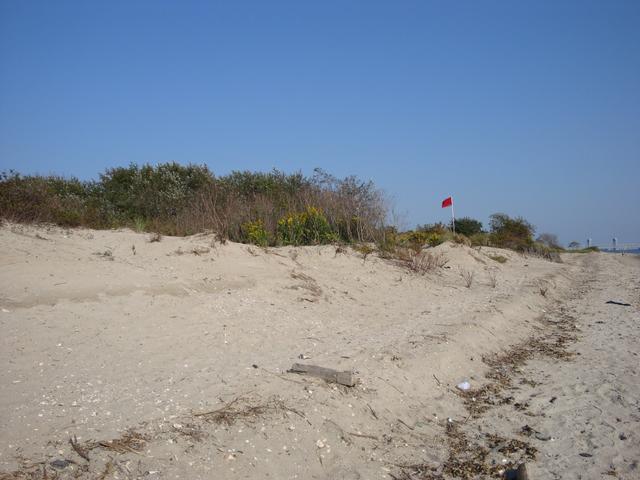
The New York quadrat protocol prescribes preparation before counting begins. Observers are asked to calibrate their stride by walking a 20-metre line three times. It specifies random starting distances and repeated spacing, rather than setting frames wherever crabs happened to gather. With enough volunteers, two teams could work alternately along the beach, one passing the other. [2]
An observer also had to wait for the recorder to finish before moving on. If a frame contained no crabs, the instructions called for a zero. It was not to be shifted toward a nearby animal. [2]
Access note: this is a historical survey account. The National Park Service currently lists a defined land area at Dead Horse Bay as closed to visitors because of potentially hazardous contamination. The map locates Jamaica Bay, not a route into the closed area. [4]