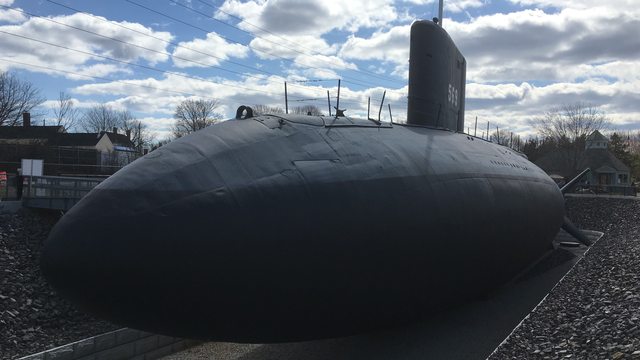
To finish moving USS Albacore onto dry land, the moving team had to put water back around it. A temporary enclosure let the stranded submarine float towards its museum cradle. Albacore Park’s account records three floods and lifts over three days in 1985. [1]
The destination was a quarter-mile inland and 27 feet above the Piscataqua River, according to the American Society of Mechanical Engineers’ landmark booklet. Reaching it required a section of railway trestle to be dismantled and a passage through a four-lane highway. This was a move into a permanent landlocked display, not a launch. [2]
Where is this place?
Albacore Park, Portsmouth, New Hampshire. This map locates the town or region, not a verified exact historic event site.
It had not gone smoothly. Reporter J. Dennis Robinson’s journal of the May haul-out describes the boat still stuck short of its cradle when the day’s watching and waiting ended. [3] The museum history explains that a marine railway had been the original plan; the enclosing cofferdam became the solution after the submarine was stranded. [1]
Keeping the enclosure filled required equipment and fuel. Walter Pratt of Rensselaer, New York, supplied twelve large pumps. Their tanks needed refilling every three hours, while pumping had to continue around the clock. Local fuel-company owner Buzz Hanscom supplied a tanker and donated the fuel. [1]
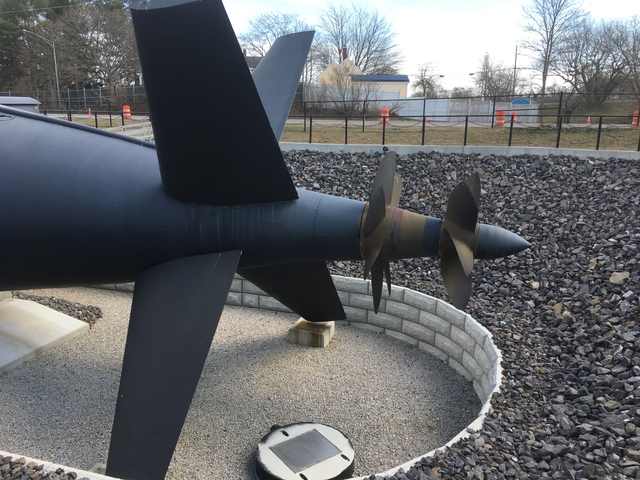
University of New Hampshire engineers helped assess the enclosure and its leak-limiting lining. The Army Corps of Engineers required assurance against flooding. [1]
Albacore settled on its cradle on 3 October 1985; the museum opened on 30 August 1986. [2] Between those dates, volunteers prepared the submarine for a different kind of passenger. Among their jobs were cutting two openings in the hull for visitors to enter and leave. [1]