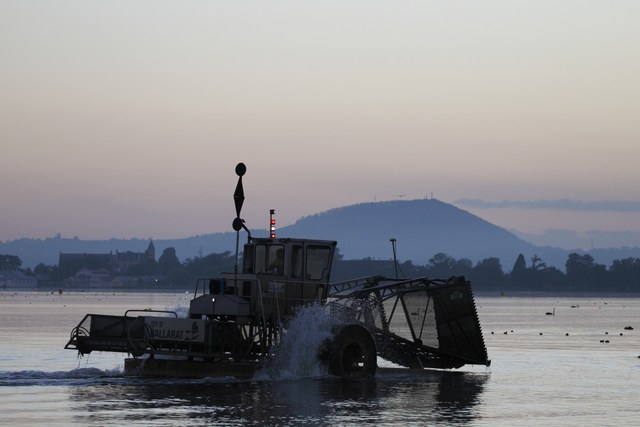
Jeff McKenna’s job on Lake Wendouree was not to remove every plant in the path of his boat. In a 2021 account published by engine manufacturer Isuzu, the Ballarat plant operator described keeping a large area of vegetation while harvesting the places needed for sport and tourism. He put the lake’s typical depth at about 1.5 metres and said growth could reach 150 millimetres a week, depending on the season.[1]
Ballarat’s 2017 master plan explains why a cleared lake was not the objective. Most of its water plants were native; water-milfoil was a dominant species, water ribbons fed black swans, and reed islands sheltered waterbirds. Aquatic plants helped maintain water quality. The plan identified harvesting chiefly as a way to keep the water usable for sports and other activities, while warning that cutting itself needed careful consideration in fragile habitat.[2]
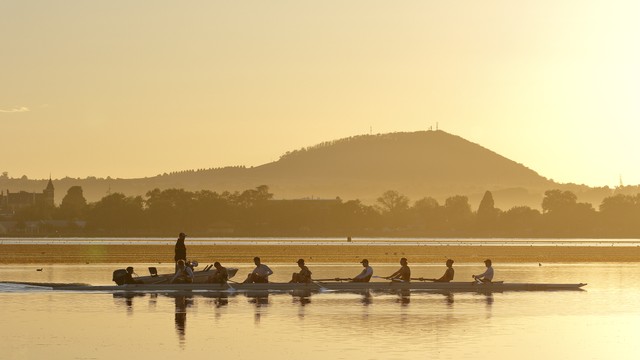
Where is this place?
Lake Wendouree, Ballarat, Victoria. This map locates the town or region, not a verified exact historic event site.
The work also involved hauling the cut material away. Isuzu’s account describes hydraulically driven paddles taking the harvester to locations set through its onboard GPS. When the city added a harvester in 2020, the new boat joined a machine in service since 2012. Its larger carrying capacity addressed another part of the day’s work: the city said it would reduce the travel time spent returning to shore to unload.[1][3]