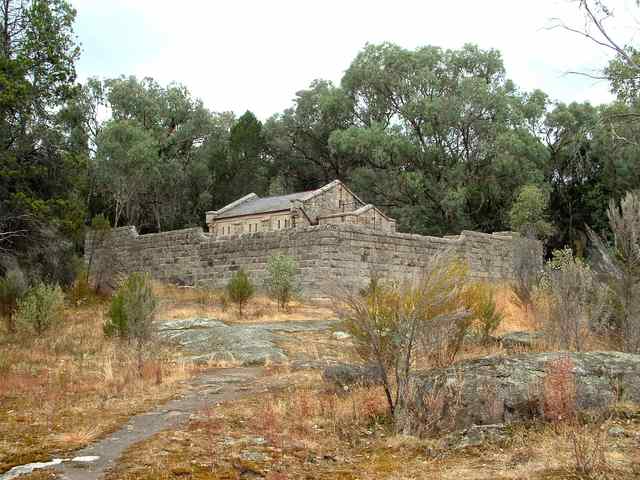
Beechworth had found someone to keep its gunpowder. Finding money for the extra job was another matter.
In its November 1860 report, the municipal council recorded the appointment of J. B. Castieau, already governor of the local gaol, as keeper of the powder magazine. Its request for a salary received a less decisive answer: provision would have to wait until the next estimates were compiled. The appointment was made; funding for the post remained unfinished business. [1]
Where is this place?
Beechworth Powder Magazine, Victoria. This map locates the town or region, not a verified exact historic event site.
The store itself was new. T. Dawson and Company had built it in 1859, and the surrounding stone wall followed in 1860. Black powder supplied the district’s mining and quarrying. Victoria’s 1857 storage legislation had prompted a network of magazines intended to bring these supplies under closer control. [2]
At Beechworth, that control extended to small fittings. The council’s heritage interpretation describes wooden nails in the floor, intended to reduce accidental sparks. Outside stood buttressed granite, a slate roof and a lightning conductor. The nails belonged to the same precautionary scheme as the conspicuous stonework, though the exterior photographs cannot show them. [2]
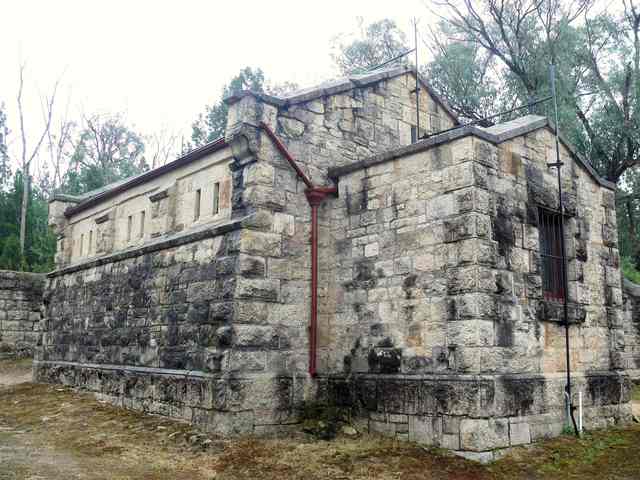
The magazine was restored by the National Trust in 1966. Indigo Shire’s account also credits Ernest ‘Ern’ Hawking’s part in the restoration. [2, 3]
Back in the 1860 council report, the keeper’s salary sits among other applications to government. A free fire engine had been refused; one offered at a valuation was declined by the council. A £150 grant for the public garden, however, had been granted and paid. [1]