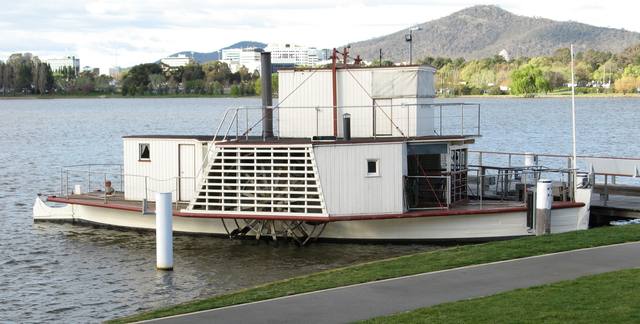
A paddle steamer built for shallow rivers ran short of water in Canberra. In March 2003, the National Museum of Australia reported that PS Enterprise had been scraping the bottom at Kingston Boat Harbour as drought lowered Lake Burley Griffin. The response was to move the boat, not retire it. [1]
New piles had been installed at a jetty beside the museum in West Basin. The National Capital Authority approved the mooring for at least two and a half years. Bringing Enterprise closer also made it more visible to visitors. [1]
Where is this place?
PS Enterprise, National Museum of Australia, Canberra. This map locates the town or region, not a verified exact historic event site.
The vessel had come a long way from Echuca, where it was launched in 1878 with a hull of river red gum. Its work had included carrying cargo, fishing and serving as a floating home. [2] The museum bought it in 1984 and, after restoration in Echuca, recommissioned it on the Canberra lake in 1988. [1]
Shallow draught—the depth a vessel sits below the waterline—was useful, but it was not a fixed immunity to low water. The museum’s specifications list a mean draught of 81 centimetres and a smaller figure for a lightened, even-keel configuration used to get the boat onto a slipway cradle. Rail, chain and water all appear in its ballast inventory. [3]
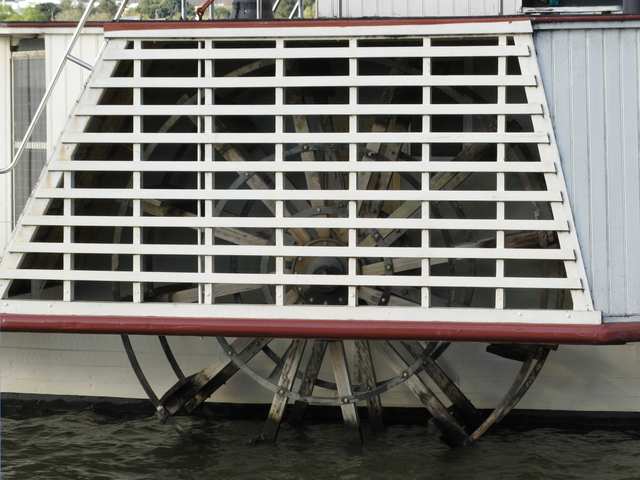
The people looking after Enterprise brought different connections to it. In the museum’s account of the move, volunteer Barbara Toohey had ancestors who had lived aboard on the Murray River. [1] Other tasks required formal qualifications: the 2003–04 annual report records three volunteer engineers gaining boiler-operation certification that year. [4]
A new berth did not finish the work. From mid-November to early December 2003, Enterprise was taken out of the lake for hull restoration and repair. The annual report counted 24 operating days over five months, and 1,342 hours contributed by 34 volunteers during the financial year. [4]