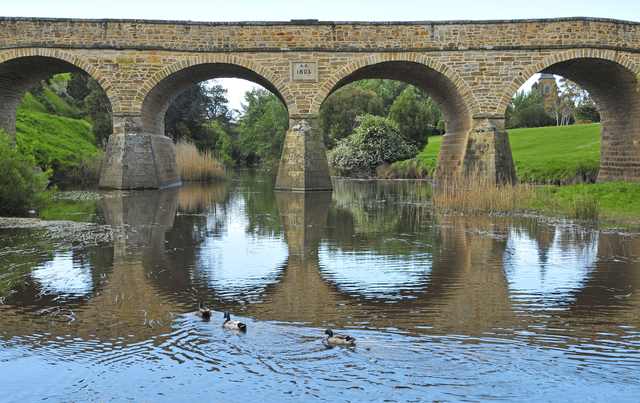
Traffic did not shake Richmond Bridge equally along its length. In a 2009 monitoring trial, the east end and the middle of the eastern river span registered the highest vibration levels. Vehicle speed mattered greatly, and so did a lengthwise failure in the road surface. These were findings recorded in the bridge’s 2010 conservation plan—not a new measurement of today’s traffic. [1]
The trial had several jobs. Engineers wanted to compare controlled traffic with ordinary crossings, locate the most sensitive areas and find a suitable position and alert level for a permanent monitor. Peter Spratt, the consulting engineer whose assessments informed the plan, had identified vulnerabilities involving foundation movement, later additions that did not bond continuously with older work, and bedding material vulnerable to washing out. The plan recommended monitoring as an early-warning tool. [1]
Where is this place?
Richmond Bridge, Tasmania. This map locates the town or region, not a verified exact historic event site.
This was still a working crossing over Tasmania’s Coal River. Convicts had built its sandstone structure between 1823 and 1825; the national heritage account describes both their forced migration and the bridge’s continuing transport use. [2]
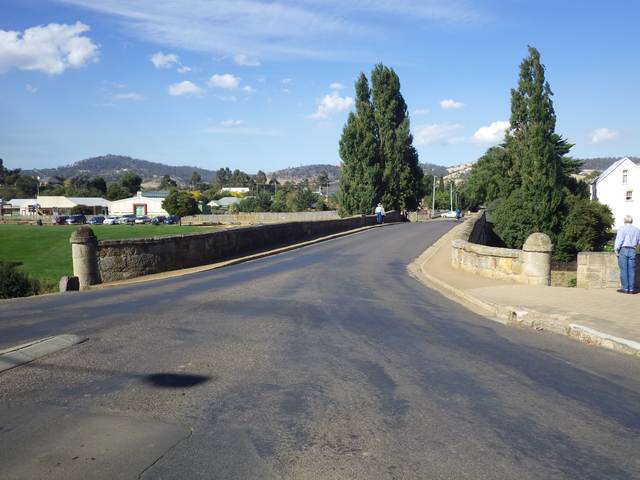
By 2023, preservation work included replacing existing vibration monitors, waterproofing the pedestrian footpaths and removing nearby poplar trees. Transport Services records that stage as completed in June. [3] Water beneath a walker’s feet was a structural concern: the 2010 plan had called for specialist waterproofing to keep it from passing through the footpaths into the bridge. [1]