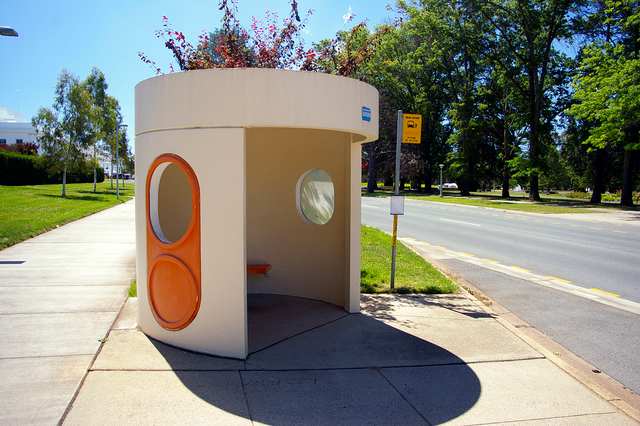
In December 1976, Canberra’s Transport Branch rejected a bus shelter without windows. Removing the Lexan polycarbonate panes had been proposed as a cost-saving measure, along with cutting back the seating. Instead, the branch ordered 52 Series II shelters, with other changes: precast floors, no seat backrests and no seats near schools. ArchivesACT traces that decision through the transport files. [1]
Keeping the windows in the design did not keep them in place. Later, panes were burned or pushed out. Replacing them became so expensive and ineffective that damaged windows were left unreplaced; passengers complained about the cold and draughts. A replacement product, Lexan 4000, was tested in ten shelters. At least half the new panes were soon damaged or pushed out. [1]
Where is this place?
Canberra, Australian Capital Territory. This map locates the town or region, not a verified exact historic event site.
Those repair problems are not the whole history of Clem Cummings’s concrete shelters. First installed in May 1975, the orange-and-cream structures were designed to move as Canberra’s transport network changed. The ACT Government’s August 2026 announcement of their heritage listing said they would still be maintained, upgraded and moved to new suburbs. [2]
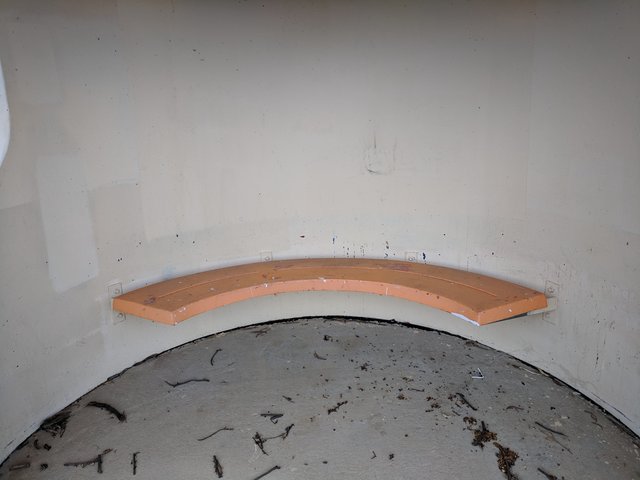
The formal registration describes a collection that varies by series and condition, including window mouldings and internal fibreglass benches. It does not define one untouched specimen. The council valued the shelters’ characteristic form, aesthetic qualities and community associations, but rejected the claim that their construction represented an exceptional technical achievement: concrete, polycarbonate and fibreglass were established materials. [3]
Their mobility also affected the official address. The heritage entry records the Transport Canberra depot in Fyshwick, although the shelters themselves stand at bus stops across the city or wait at the depot for deployment. [3]