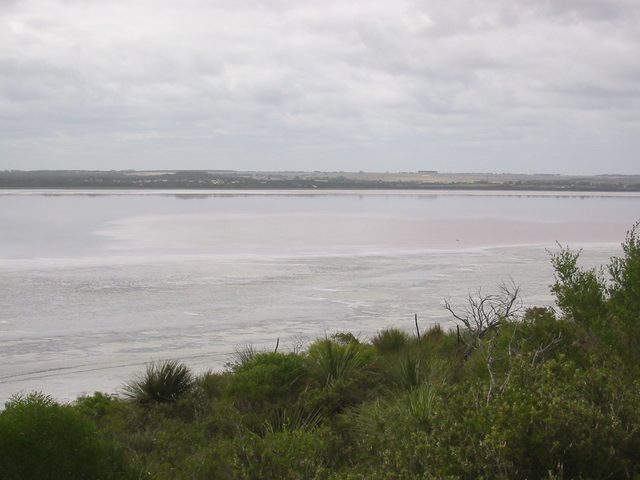
The disused salt ponds beside Esperance’s Pink Lake offered Tilo Massenbauer a place to test a reversal. His 2020 feasibility study proposed using the old evaporation ponds to investigate how added salt might bring back the lake’s colour—before attempting a much larger transfer from nearby Lake Warden. The report identified eight ponds left from salt production, but warned that their condition was unknown. [1]
The proposed comparison was more specific than simply making water saltier. One pond would provide a baseline using Pink Lake water. Others would receive Lake Warden brine, harvested salt crust, or a combination, with the colour response of the alga Dunaliella salina monitored. Brine would bring nutrients as well as salt, another reason to test the response. [1]
Where is this place?
Pink Lake, Esperance, Western Australia. This map locates the town or region, not a verified exact historic event site.
The Shire’s project account links Pink Lake’s diminished colour to excessive salt removal. It describes collecting crust and trialling brine pumping as possible ways to restore it. The proposed transfers would aim to encourage the lake’s own colour-producing organisms. [1][2]
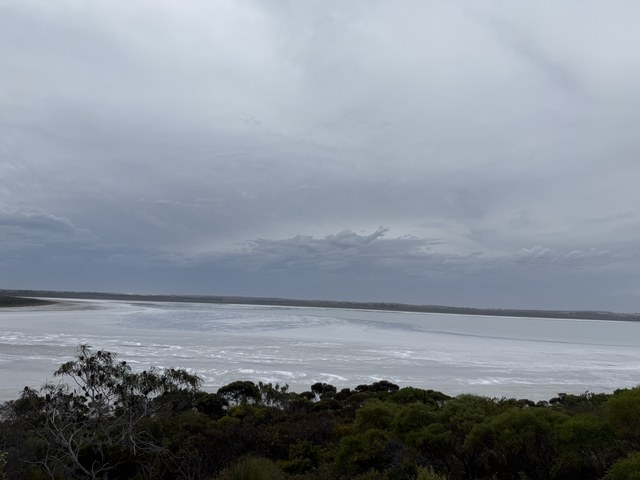
At the annual electors meeting on 3 February 2026, the larger project was still looking for financial backing. Asset management director M. Walker told the meeting it had been costed at about A$2 million, but a funding application had failed. The Shire was waiting for further grant rounds; the president also agreed to approach state and federal ministers. [3]