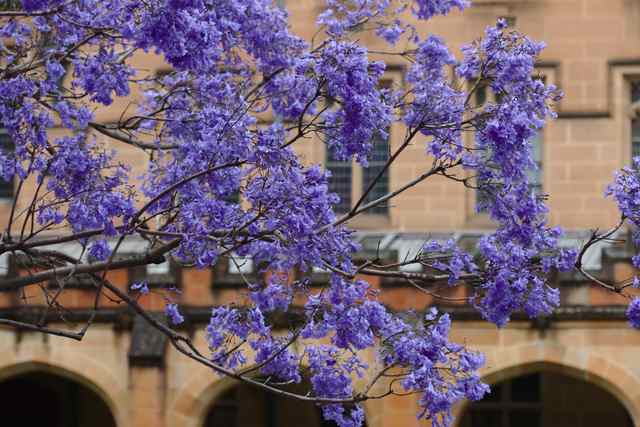
When the University of Sydney’s Quadrangle jacaranda fell on the night of 28 October 2016, two possible successors were already growing. The university had hired a specialist grower in 2014 to take cuttings from the ageing tree. Grafted onto other jacarandas, those cuttings had produced two clones by the time the university announced the collapse. [1]
The announcement described the replacement stock as genetically identical to the old tree. It also specified the grafting: material from the familiar jacaranda was growing on the bases of other trees. The project had begun before the Quadrangle lost its flowering landmark, not as a hurried response to the empty corner. [1]
Where is this place?
University of Sydney Quadrangle. This map locates the town or region, not a verified exact historic event site.
On the evening of 20 July 2017, planters brought trucks and earth-moving equipment into the Quadrangle. A young jacaranda went into the old tree’s position; an Illawarra flame tree was planted opposite it. Both were about 4.5 metres tall. The public ceremony followed the next day, after the planting work. [2][3]
Mark Moeller, the university’s landscape and grounds manager, described preparations that a photograph of the new tree would not show: work on the soil and drainage before planting. Speaking to the university’s alumni magazine that October, he said it was a relief to have both trees in the ground. He expected them to need a couple of years to settle in. [3]
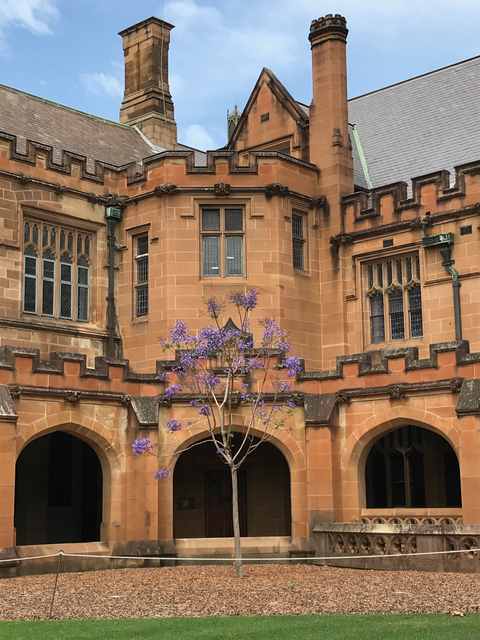
The replacement’s flowers did not wait that long. The same October account reported that the new jacaranda had already begun to bloom. Moeller and colleagues with young children had another occasion in mind: a future graduation when they might point to the trees and say, “I helped plant those trees”. [3]