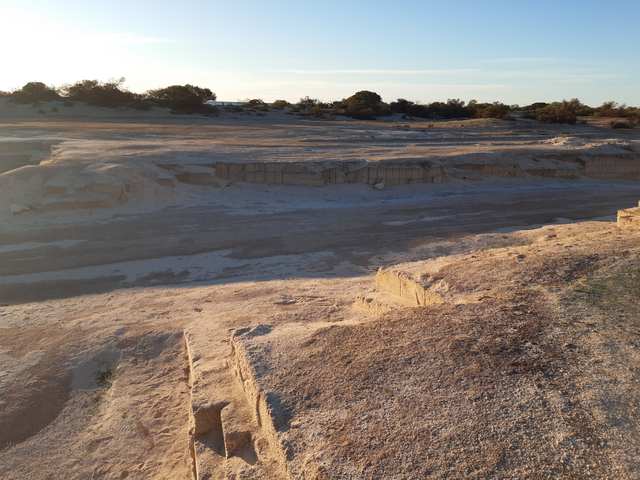
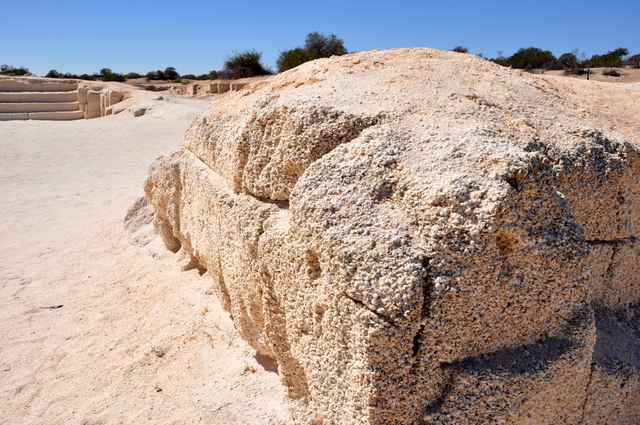
The cut faces of Hamelin Pool’s shell-block quarry are packed with little curved shells. The building material began as a beach deposit. In their account of Shark Bay’s shell ridges, researchers Paddy Berry and Phillip Playford distinguish loose shells, or coquina, from the naturally cemented material they call coquinite—the stone cut into blocks. [1]
Much of that supply came from one small cockle, Fragum erugatum. It thrives in water saltier than the open sea, where many of its predators fare less well. Microscopic algae living in the cockle’s tissues provide products of photosynthesis in an otherwise nutrient-poor environment. Storms carry shells ashore; larger storms can heap them into substantial ridges. [1]
Where is this place?
Hamelin Pool Shell Quarry, Western Australia. This map locates the town or region, not a verified exact historic event site.
Shell blocks from different deposits were not interchangeable. A February 1999 draft management plan for Hamelin Pool Common described the local quarry’s blocks as relatively poor at carrying loads. It said the Carbla quarry farther north had been used more widely because its material was stronger. The same document recorded growing demand for repairs and additions to existing shell-block buildings. [2]
Denham provides a built example: St Andrew by the Sea, which the Anglican diocese records as opening in 1954. Its walls use coquina shell blocks, also identified in the Western Australian Museum’s account of the town’s surviving shell buildings. The material was local, but the funding crossed the world: the diocese credits the League of Help, an English organisation supporting church construction overseas. [3][4]