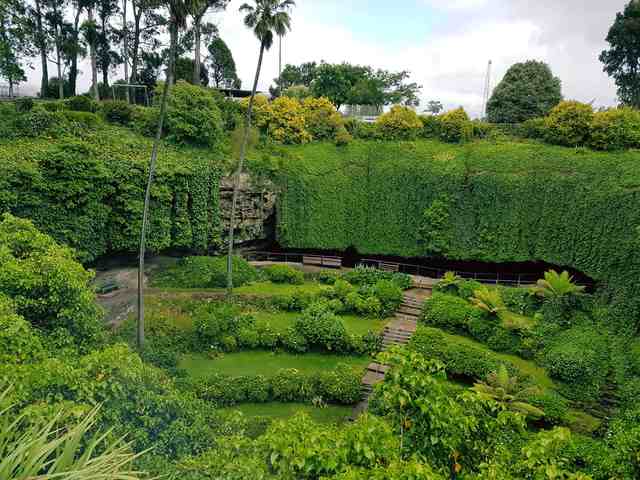
Elizabeth Norton remembered the roses lasting only a day. In a 2019 Gardening Australia account of Umpherston Sinkhole in Mount Gambier, she described possums eating them almost as quickly as they could be planted. Hydrangeas proved a more workable choice. The animals living in the garden had helped determine what its gardeners could grow. [1]
The Nortons had already helped change what lay beneath those plants. By the 1970s, the former garden had become a rubbish pit. Ken Norton recalled volunteers arriving from the mill and town on weekends to clear it. Elizabeth remembered the absence of garden beds. Clearing the refuse was followed by reinstating and planting them—not simply opening an overgrown garden gate. [1]
Where is this place?
Umpherston Sinkhole/Balumbul, Mount Gambier. This map locates the town or region, not a verified exact historic event site.
Plant choice remained a management question in the March 2026 draft master plan for Umpherston Sinkhole/Balumbul. It called for reviewing the planting palette for long-lived, drought-tolerant species suited to local conditions, and for better maintenance access into the sinkhole. The council subsequently consulted on two options, one involving more extensive intervention than the other. These were proposals, not a record of completed alterations. [2][3]
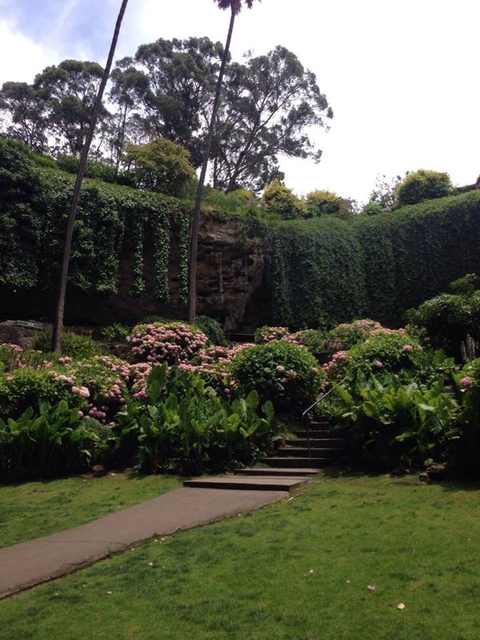
Working below the rim also meant carrying material back out. In the same 2019 account, horticulturist Rick Karsten described the difficulty of removing prunings. His practical advice was to bring everything needed for the job on the way down; a forgotten tool meant another trip up the stairs. [1]