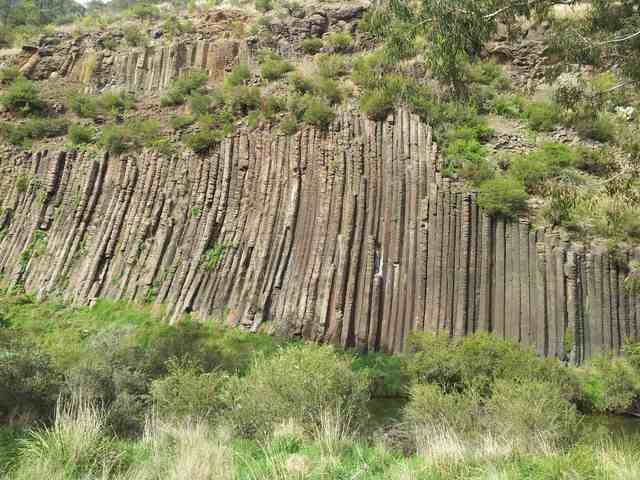
The stone columns gave Organ Pipes National Park its name. Rebuilding the vegetation around them required something less photogenic: knowing where the seed came from. At this park on Melbourne’s north-western edge, planting an Australian native was not automatically the same as restoring a local plant community. [1, 2]
In a 1974 account, National Parks Service technical officer Geoff Edwards described a landscape damaged by grazing, weeds and erosion. His team sought seed and cuttings from plants within the park, with specified exceptions where species had become scarce or disappeared there. Volunteers searched nearby remnants for useful material. The aim was not simply to make the valley green. [1]
Where is this place?
Organ Pipes National Park, Organ Pipes Road, Keilor North, Victoria — park context, not a particular seed-collection or cultural site. This map locates the town or region, not a verified exact historic event site.
A planting list needed a history
Edwards explained that old naturalists’ accounts, surviving vegetation and other evidence helped the team reconstruct earlier plant communities. He also described the awkward order of practical work: sowing seed could achieve little while rabbits ate seedlings, and dense boxthorn provided rabbits with shelter. A netting fence was an early major undertaking. Restoration involved deciding what to do first, as well as what to plant. [1]
The 1998 management plan made the geographical distinction explicit. It described different vegetation communities across the plains, escarpment and creek corridor. A plant suitable beside the water was not necessarily an answer for the higher basalt ground. The plan called for a historically grounded species list, developed with the Friends of Organ Pipes and botanical specialists, and for the nearest suitable seed sources—inside the park where possible. [2]
That did not mean every seed originated within the boundary. The same plan reported that some material had come from sites as far as 20 kilometres away. It also recognised the Friends’ contribution to researching and carrying out the programme, particularly their support for the nursery. This was organised collective work, not just occasional planting beside a scenic attraction. [2]
The nursery was a tool, not the finish line
The Friends’ educational history records a seed bank and secure seed store established in 1990. It describes keeping records of planting and direct-seeding trials, so later workers could assess what happened rather than rely on a promising first impression. The page also states that the park nursery is no longer used. An old plan to maintain it should not be mistaken for a description of a working nursery today. [3]
The work nevertheless continues in other forms. In a May 2024 Parks Victoria feature, volunteer Loretta Beliniak described learning from longer-serving members after joining in 2018. Former convenor Terry Lane described a group large enough to tackle separate areas at once. Their experience gives the documentary history a human continuity without making one generation responsible for every improvement. [4]
Nor did care for this landscape begin with the national park. It is Wurundjeri Country. The Friends describe their relationship with the Wurundjeri Council and a cultural-awareness induction intended to inform volunteers before planting disturbs the ground. Ecological restoration does not turn the valley into land without an earlier or continuing human history. [5, 6]
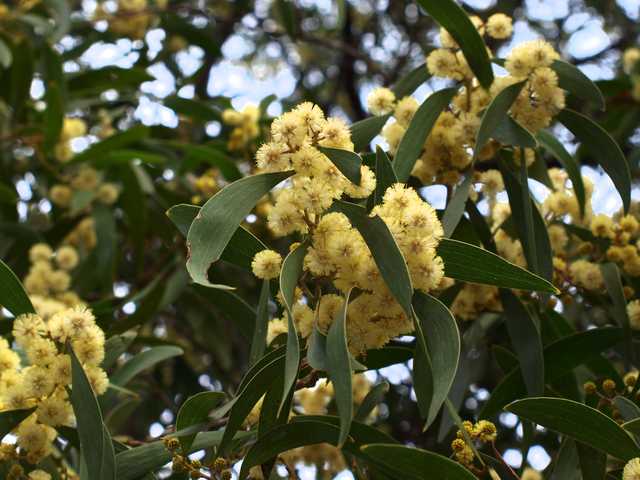
The photographs show the columns and a flowering wattle in the park, not a before-and-after experiment or proof of any particular planting’s ancestry. The less visible evidence sits in species lists, source decisions and trial records. Those records help explain why a green hillside can represent many separate choices rather than one completed act of repair.