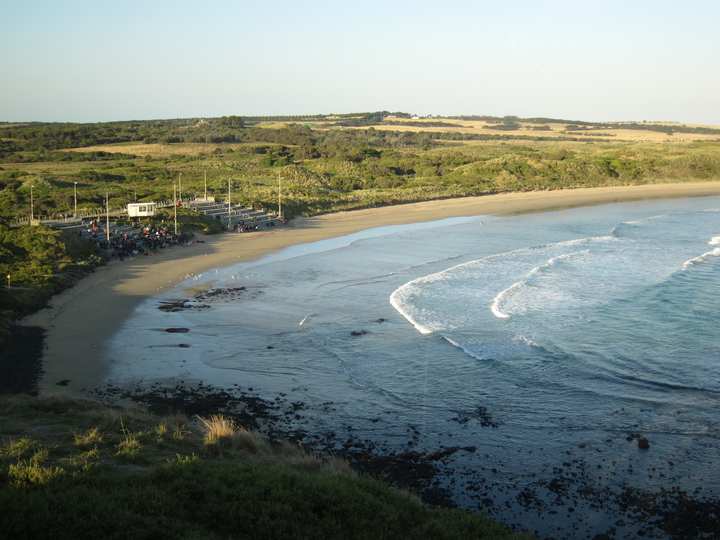
At Summerland on Phillip Island, grass could form a barrier between the sea and a nesting place. Phillip Island Nature Parks’ 2018 weed strategy describes roadside tangles more than half a metre thick that little penguins and short-tailed shearwaters could neither walk through nor penetrate to make burrows. [1]
The work was part of turning a housing estate back into penguin habitat. Victoria’s buyback began in 1985 and ended in 2010. In Fiona Pepper’s 2018 ABC interviews, former resident Jean Verwey recalled the long uncertainty while properties were being purchased; Elisabeth Lundahl-Hegedus remembered watching penguins pass her house. [3]
Where is this place?
Summerland Beach, Phillip Island. This map locates the town or region, not a verified exact historic event site.
The birds helped set the work calendar. The weed strategy’s account of the 2011–2013 rehabilitation project explains why most restoration work needed to happen in winter: fewer penguins were present, the shearwaters were away on migration, and crews could avoid the main spring–summer breeding period. [1]
Large woody weeds were conspicuous, but the report identifies spreading grasses as the harder problem. Kikuyu had to be removed from native tussocks by hand, with regrowth cut and spot-treated repeatedly before bare patches could be replanted. Some penguins had been found caught in the roots. [1]
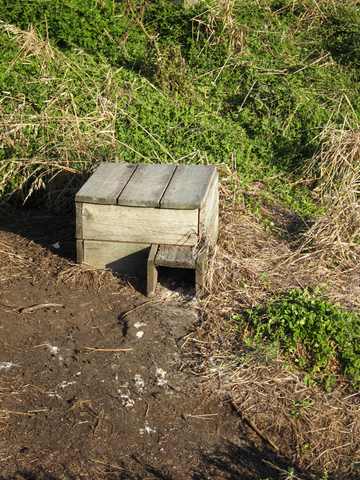
The Nature Parks’ 2010–2011 annual report puts hours against that work: contractors and staff undertook 4,269 hours of weed control, targeting grassy and woody weeds. It also records 40,000 plants of local provenance grown in the park’s nursery and planted across the estate. Volunteer groups installed more than 523 artificial penguin homes. [2]