The mechanism that helped point Parkes’s giant radio dish had its own entry on the maintenance list. In a November 2016 update, senior systems scientist Jimi Green reported problems with the master equatorial: it was failing to lock, and there were difficulties with its motion and operating speeds. [1]
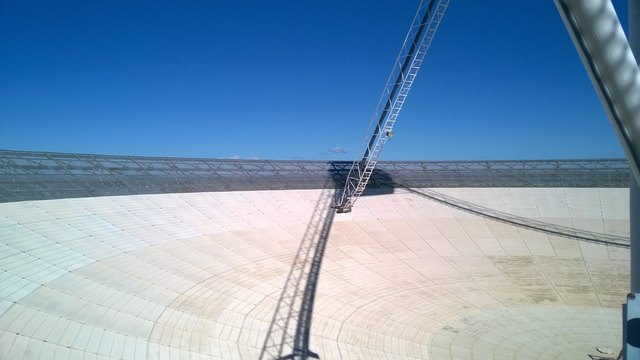
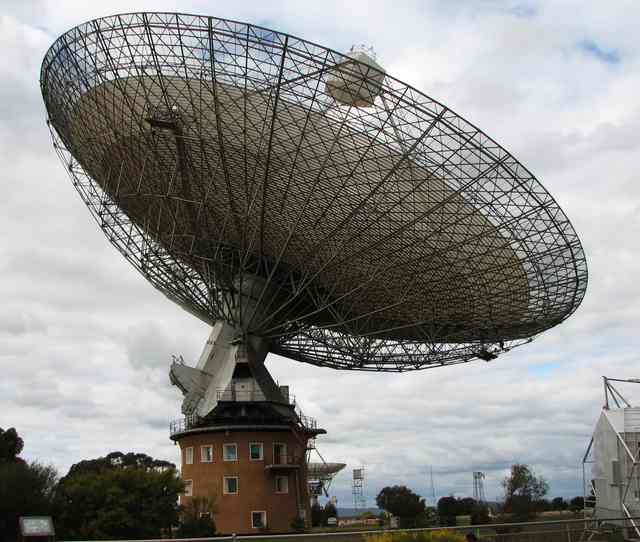
The 64-metre telescope is now called Murriyang, a name given by local Wiradjuri elders in 2020. Its basic structure dates from 1961, but CSIRO lists the surface, controls, focus cabin, receivers, computers and cabling among the parts upgraded since then. [4]
Where is this place?
Parkes Observatory, New South Wales. This map locates the town or region, not a verified exact historic event site.
The master equatorial was part of the telescope’s guidance system, not a receiver collecting radio waves. CSIRO’s heritage account explains the design problem it had helped solve. A dish mounted to turn horizontally and tilt vertically was structurally simpler than a large equatorial mounting, aligned with Earth’s rotation. But guiding that simpler structure accurately across the sky required a different solution. The master equatorial and a servo mechanism—an automatic correcting system—provided it. [2]
By June 2017, Green’s next report listed fixes to the master equatorial among the work undertaken during a four-week May shutdown. The power switchboard was replaced, the focus cabin’s air-conditioning unit overhauled, and the tower’s air-conditioning switchboard cleaned up. The summary records the work without identifying every component changed inside the guidance mechanism. [3]
Other parts had their own repair histories. In the earlier update, Green described the near-complete refurbishment of the multibeam receiver. Its feed-horn vacuum windows and vacuum O-rings had been replaced, along with an unstable amplifier identified as 12B. Cooling equipment had been serviced. These were receiver repairs, separate from the pointing problems. [1]