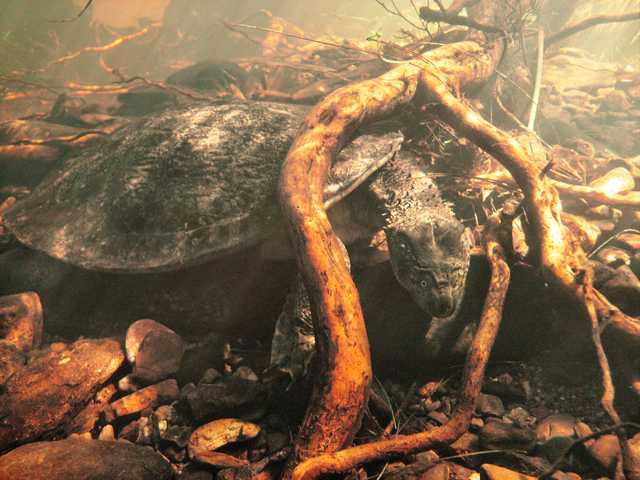
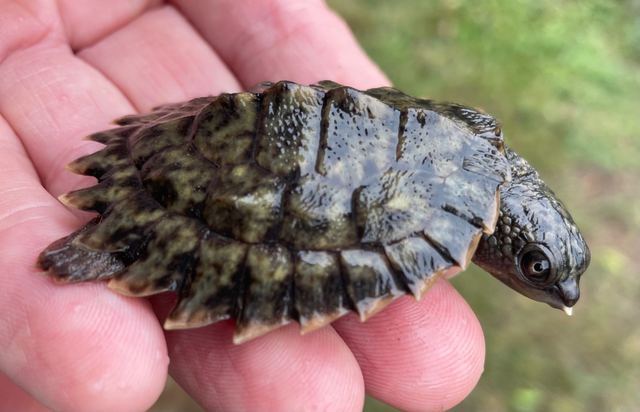
At Rookwood Weir on Queensland’s Fitzroy River, the turtle route climbs in stages. Small pools interrupt the ramps so an animal can rest; shaded sections provide shelter. The design was intended for the Fitzroy River turtle and white-throated snapping turtle, rather than asking them to negotiate the weir itself.[1]
Watching those stages proved harder than installing five cameras. Sunwater placed motion-triggered units at the passage’s entrance, middle and exit in October 2024. The 2024–25 monitoring report, prepared by GHD for Tunuba and Sunwater, found that camera placement and coverage did not permit detailed assessment of species and behaviour. A separate electronic tag-reading system had technical difficulties and supplied no turtle records.[2]
Where is this place?
Rookwood Weir, Queensland. This map locates the town or region, not a verified exact historic event site.
The report nevertheless confirmed upstream passage by both target species, using several monitoring methods. Completed journeys were few compared with partial use; the report also flagged increased injuries in white-throated snapping turtles. It called for the cameras’ type, number and positions to be reassessed for continuous coverage along the whole route, and for tag readers to be checked and repaired if needed.[2]