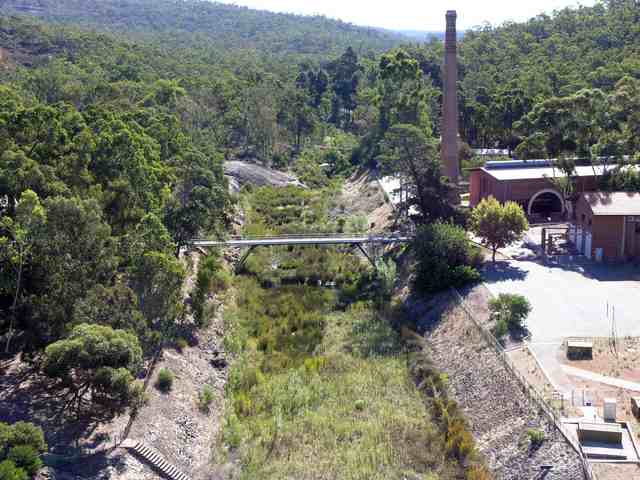
The tall brick chimney beside No 1 Pump Station at Mundaring Weir in Western Australia looks like a starting point for the Goldfields water story. In one important respect, it came later. The station’s first smokestack was steel. Its brick successor belongs to a history of worn materials and replacements, not an industrial scene preserved exactly as it opened. [1]
The National Trust’s Golden Pipeline account records that James Simpson’s firm supplied riveted steel chimneys for all eight original pump stations. At No 1, internal corrosion made the stack unsafe, and it was pulled down in 1911. The replacement brick chimney provided the draught needed by the boilers’ fireboxes. It was working equipment before it became a landmark. The scheme’s later electric pumping stations should not be confused with this retired steam plant. [1]
Where is this place?
No 1 Pump Station, Mundaring Weir, Western Australia — retired steam station, not a claim of current visitor access or water-supply conditions. This map locates the town or region, not a verified exact historic event site.
Conservation has also required a much closer view than the familiar silhouette offers. In its 2002–03 annual report, the Trust recorded an investigation of the surviving A engine. Western Australian Museum conservators installed data loggers inside it to monitor corrosion; members of a mechanical and electrical advisory group examined the engine and pump internally with an endoscope. The report described work still being investigated and planned, not a completed overhaul or a return to pumping. [2]
The same period brought a reconsideration of what visitors should notice. Reviewing the museum redesign in 2003, architect and lecturer William Taylor described old displays being cleared so that machinery and the building itself could carry more of the explanation. His review also resisted an uncomplicated celebration of engineering: the boiler-house interpretation drew attention to the timber consumed by the furnaces and the changed landscape outside. That is Taylor’s contemporary reading of the project, not a claim that every display remains unchanged today. [3]
The chimney demanded attention again two decades later. A National Trust conservation account published in June 2024 said metal strapping near its top had deteriorated and broken; the site had closed in August 2023. Heritage builders working from a crane removed loose metal belts, conserved masonry and treated metalwork. The work also reached deteriorated timber gables and other parts of the building. [4]
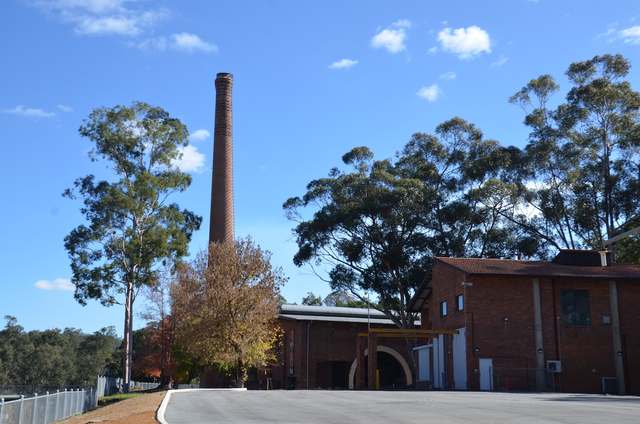
Neither the endoscope nor the crane belongs to the usual picture of steam-age water supply. Yet both help explain how this particular place survives after steam. The silhouette can remain recognisable while its care requires new equipment, close observation and decisions about which materials can stay. A monument to maintenance is itself a maintenance job. [1][2][4]