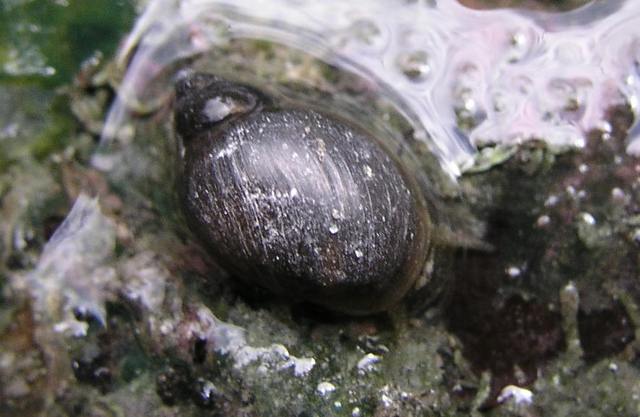
A camera lost in Banff’s thermal water could become something other than lost property. The Banff Springs snail recovery plan, amended in 2010, listed cameras alongside garbage in its maintenance protocols. A floating object carrying snail eggs was to remain in the pool until they hatched. These were instructions for trained, authorized personnel—not an invitation for visitors to retrieve things themselves. [1]
At Cave and Basin National Historic Site, the recovery plan made removing an unwanted object a question of what had begun living on it.
Where is this place?
Cave and Basin National Historic Site, Banff, Alberta, Canada — public-site context, not a map of restricted springs or snail microhabitat. This map locates the town or region, not a verified exact historic event site.
The snail depends on warm, mineral-rich spring water and a microbial community that supplies both food and habitat. Canada’s 2018 COSEWIC assessment described a specialist confined to thermal-spring clusters within Banff National Park, with extreme natural fluctuations in its numbers. [3]
Plumbing inside the habitat
The recovery plan treated pipes, valves, drains and artificial pools as more than the machinery surrounding nature. Much of that infrastructure was itself critical snail habitat. The plan argued that infrastructure maintenance was necessary for protecting habitat. [1]
The background account described two incidents in 2005 when blocked drainage pipes caused the Basin Pool to flood. Thousands of snails were stranded in freezing conditions, and snails died. Keeping water moving was part of protecting them. [2]
But repair could bring a different risk. The 2018 assessment reported that plumbing work in December 2016 lowered the Basin Spring Pool by about four centimetres. It judged that exposed egg capsules probably froze and died, and that this may have contributed to low snail numbers. That is a qualified explanation, not proof that the repair alone caused the decline. [3]
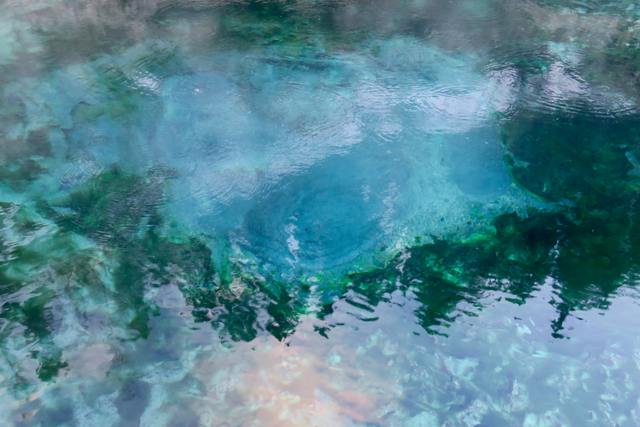
Natulive Canada’s November 2016 photograph shows water covering pale rock at the site. It is a view of the watery setting—not a measurement of the later drop or a photograph of damaged eggs.
Later evidence added another constraint. Parks Canada’s 2022 multi-species implementation report said genomic research found distinct populations at different springs, giving no support for transfers between sites to bolster or rescue populations. It also reported that populations persisted at all viable sites during its monitoring period. [4]
Returning a snail to its own pool is not the same as moving it between springs. Here, conservation requires knowing which kind of intervention a situation actually calls for.