To look for a suspected leak inside the Diefenbunker, Doug Beaton had to make the room darker. In an interview published by Legion Magazine in May 2006, the retired Parks Canada artifact conservator described crawling through cramped spaces in the machine-room mezzanine with a small flashlight. The fluorescent lights had to stay off: their hum interfered with listening for drips. By then, Beaton was a volunteer guide and president of the museum’s board. [1]
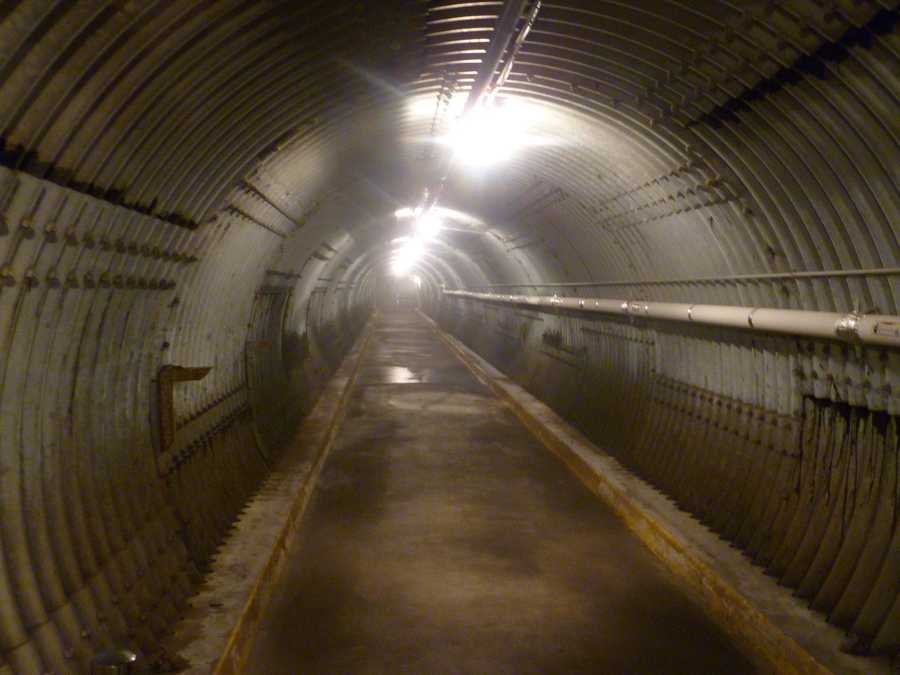
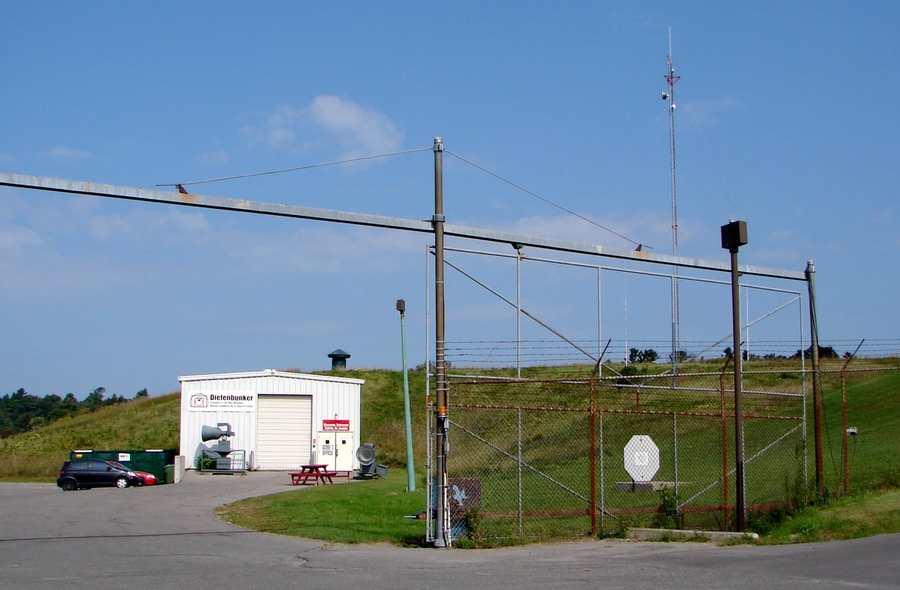
The building at Carp, now part of Ottawa, contained four underground storeys. Its self-contained services included electricity, ventilation, water supply and sewage disposal, with backup systems designed into the structure. Parks Canada’s heritage description singles out flexible exterior utility connections among its engineering features. Above ground, the entrance hut and tunnel, antennas and fencing gave comparatively little indication of the concrete building below. [2]
Where is this place?
Diefenbunker, 3929 Carp Road, Ottawa. This map locates the town or region, not a verified exact historic event site.
The bunker had stopped operating as a communications and civil-defence hub in 1994. [2] Turning it into a museum also meant finding equipment to put back. Board vice-president Dave Peters told the same reporter that the facility had been stripped after decommissioning. The replacement finds included beds, generators and early-1980s mainframe computers donated by Carleton University. [1]