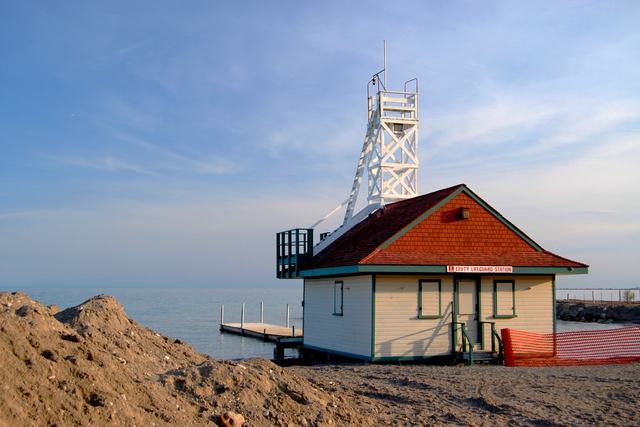
Leuty Lifeguard Station’s relocation was short enough for its construction notice to describe the destination as just north of the previous site. Beneath the building, the change was substantial: a new steel frame and helical-pile foundations, with a new deck and dock included in the project. [1]
That notice, published in October 2018, names the City of Toronto as owner and Canada Construction Ltd. as contractor. It records substantial performance on 24 September—not the day the station was lifted, but a milestone for the construction work. [1]
Where is this place?
Leuty Lifeguard Station, Toronto, Ontario. This map locates the town or region, not a verified exact historic event site.
The work followed a difficult spring on Toronto’s waterfront. A June 2017 city report placed Leuty among the first sites needing attention as Lake Ontario rose rapidly in April. City staff and the Toronto and Region Conservation Authority worked to protect the station’s structural integrity, along with the boardwalk and beach. Emergency operations soon expanded to the Toronto Islands. [2]
The January 2018 capital-budget briefing separated the next tasks. It listed $200,000 for relocating the station away from exposure to erosion and heavy waves, and another $100,000 for grading sand and repairing the shoreline to its west. Those were preliminary budget provisions, not a final invoice for the completed move. [3]
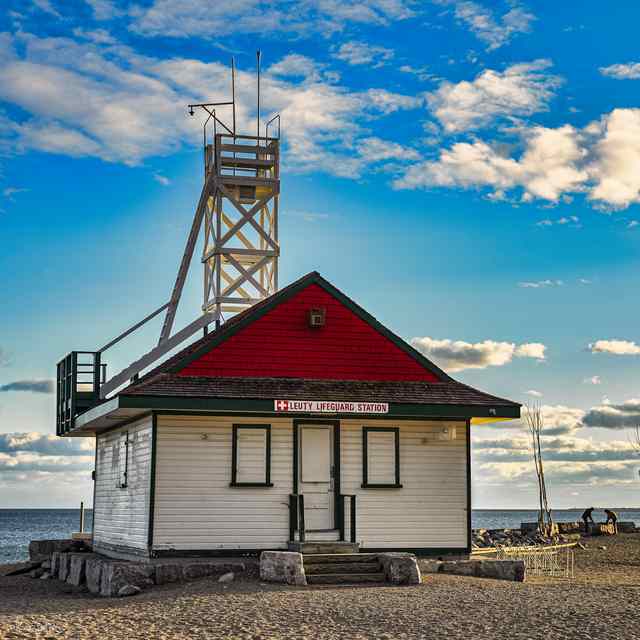
The same briefing divided responsibility: the city looked after waterfront buildings, trails and boardwalks; the conservation authority looked after shoreline stability and structures such as beach curbs. [3]