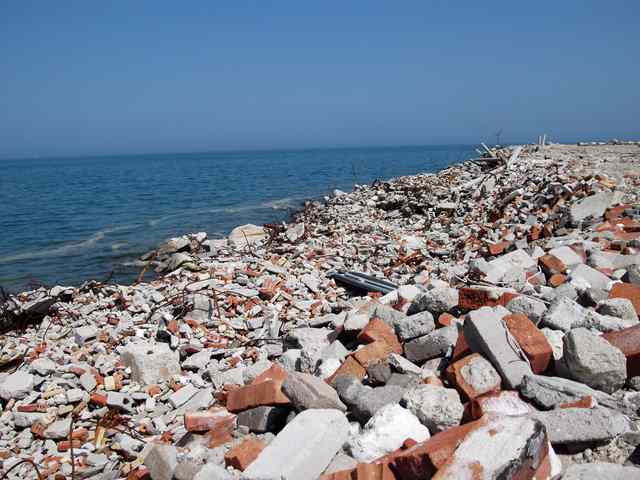
Toothpaste tubes were among the things sticking out of Toronto’s constructed shoreline. In a 2010 visual survey of the Leslie Street Spit, Heidy Schopf and Jennifer Foster recorded teacups, medicine bottles and eyeglasses as well as bricks and concrete. The fill included fragments of domestic life, not just building fabric. [1]
They worked from May to July, using an older park plan to locate two dumping zones associated with 1964 and 1980. Maps and GPS helped them find the sections; photographs recorded what erosion had exposed. This was a surface survey, not an excavation. [1]
Where is this place?
Tommy Thompson Park entrance, Toronto, Ontario. This map locates the town or region, not a verified exact historic event site.
The peninsula had begun as a harbour project in 1959, when the opening of the St. Lawrence Seaway encouraged plans for more shipping. Rubble from demolished buildings and subway construction helped make sheltered water beyond the old shoreline. Sand dredged from the harbour later formed peninsulas on the city-facing side. [2]
The survey did not find the same mixture everywhere. Its 1980 section contained more uniform construction debris, without the household artifacts recorded in the earlier zone. The researchers compared these deposits with Toronto’s changing development history—but did not trace individual objects back to particular addresses. [1]
Nor is the Spit one continuous rubble beach. A 2021 city report distinguishes its exposed, concrete-and-brick eastern shore from the sandy western shore sheltered inside the Outer Harbour. The report describes wetlands, woodland and grassland produced through both natural succession and habitat work. [3]
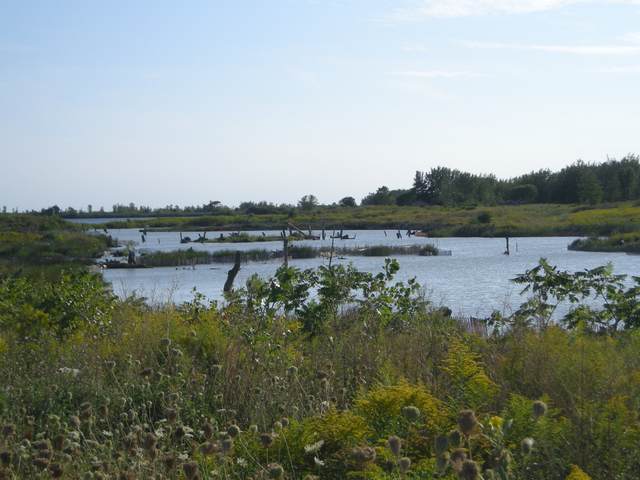
Those habitats became central to the park’s planning. TRCA credits Friends of the Spit and Toronto Field Naturalists with helping shift the 1995 master plan towards a natural area rather than the earlier emphasis on boating and active recreation. [2]
The toothpaste tubes made a different kind of record: recognisable household objects whose former homes the study could not identify. [1]