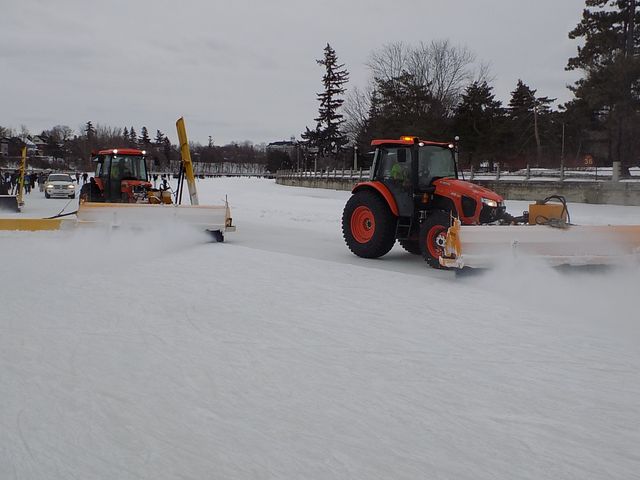
A machine intended to help ice thicken still had parts that needed keeping warm. Carleton University’s January 2024 account of its snow-clearing robot described researchers insulating the batteries and electronics against Ottawa’s winter cold. The first prototype weighed 50 kilograms and had tracks and a colourful, 3D-printed body. [1]
Its intended job came before the heavy equipment could safely go out. A thick blanket of snow insulates the canal, slowing ice growth. The team wanted a lighter machine to remove that cover and help the National Capital Commission start thickening the Skateway earlier. This was a prototype and a programme of trials, not a report of an autonomous fleet already maintaining the canal. [1]
Where is this place?
Dow’s Lake, Rideau Canal Skateway, Ottawa. This map locates the town or region, not a verified exact historic event site.
Siri Konakalla worked on the electronics, assembly and upkeep; Boyan Zhou handled the printing. Elsewhere in the same research partnership, Frederic Brieger measured ice thickness with ground-penetrating radar mounted on a sled. [1]
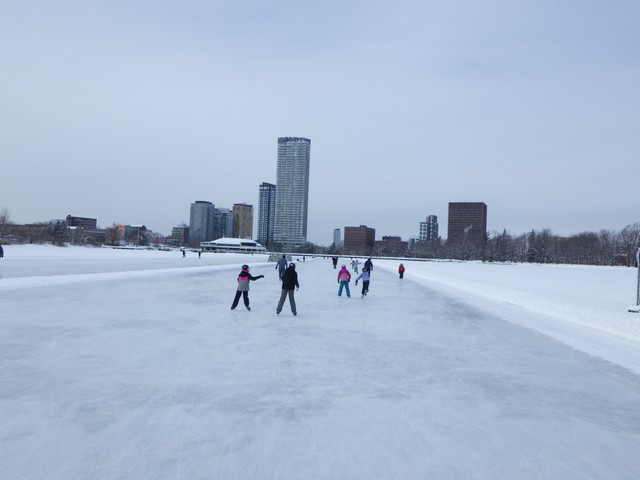
The commission’s account of the adaptation work identifies other obstacles along the route: warm drainage near Laurier Street, salt intrusion and heat from underground pipes. Removing snow was one intervention among several. The commission also reported testing ways to manage that warm drainage—a problem a snow blade alone would not remove. [2]