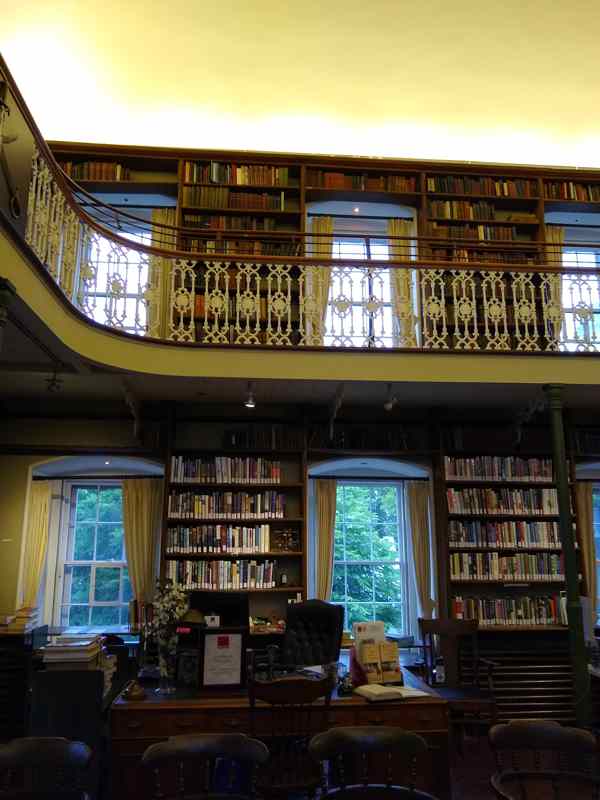
At Québec City’s Morrin Centre, some records of the past were carefully kept on shelves. Others were thrown away. The English-language library has occupied the building since 1868, preserving books and publications of the Literary and Historical Society of Quebec. [1] But the property’s earlier life as a prison left another kind of collection: discarded objects and animal bones recovered from its latrines. [2]
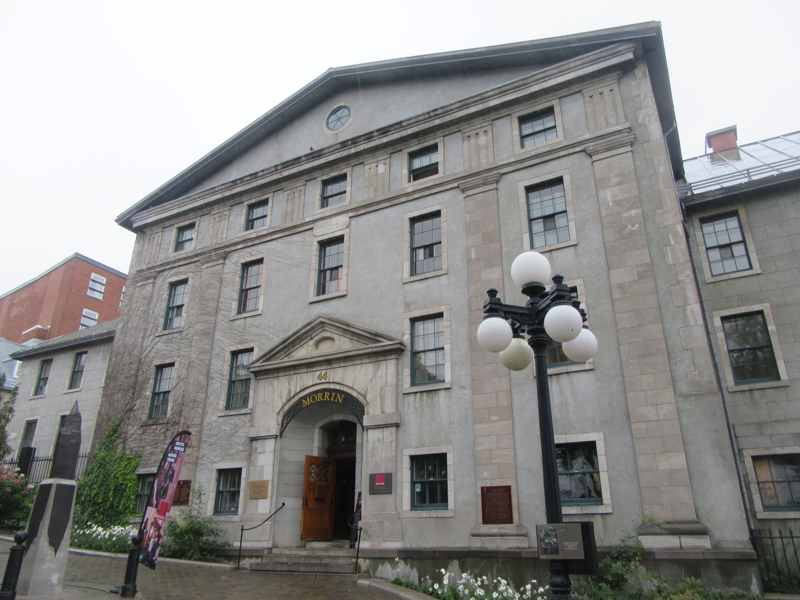
The contrast is sharper than a picturesque library’s secret-dungeon story. When the prison closed in 1867, the building underwent extensive internal changes for Morrin College, which opened there the following year. Two cell blocks survived. The library moved in alongside the college, not after it; when the college closed in 1902, the Society’s work continued. The building’s histories overlap rather than taking tidy turns. [3][9]
Where is this place?
Morrin Centre, 44 chaussée des Écossais, Québec City — building context, not a mapped excavation or current tour promise. This map locates the town or region, not a verified exact historic event site.
What the rules did not put on the plate
Archaeological work in 1991–93 and 2005–06 investigated parts of the building and its yards. [4] Prison regulations prescribed bread, potatoes, gruel and water. Yet the city’s published archaeological summary suggests meat too: chiefly beef, with less mutton and pork. Economical cuts predominated, alongside some better ones. [5]
That is not a recovered menu naming what each prisoner ate on a particular day. The city’s archaeologists suggest that finer cuts and domestic birds probably belonged to meals for resident staff. Chicken, turkey and goose remains cannot simply be turned into a claim that everyone in the cells ate well. A shared deposit can hold traces of people who did not share the same privileges. [5]
Even an apparent absence needs care. Cod bones were uncommon, but the archaeological account notes that their fragility may partly explain that scarcity. What survives in the ground is not a perfectly balanced sample of what once reached the table. [5]
The rooms changed; the buried evidence remained
The latrines themselves complicate any easy story of progress. According to the city’s archaeological interpretation, the cell blocks had water-pumped privies connected to pits behind the building. Yet historical documents describe a system that worked poorly. The city cites an inspector’s 1861 complaint about severe odours and unhealthy conditions. Providing sanitary equipment on a plan was not the same as keeping it effective in an overcrowded institution. [6][10]
During conversion to the college, the projecting latrine structures were dismantled. Their pits were partly emptied, cut down and filled with demolition debris. [6] Erasing a prison’s working arrangements could leave material for a later investigation. The rear yard did not have to look like a prison for evidence of one to persist beneath it.
The library and the archaeological collection therefore preserve different sorts of knowledge. One contains material that people chose to retain and read; the other makes sense of things discarded during daily life and rebuilding. Neither replaces the other. At the Morrin Centre, the shelves are not the only place where the past can be read.