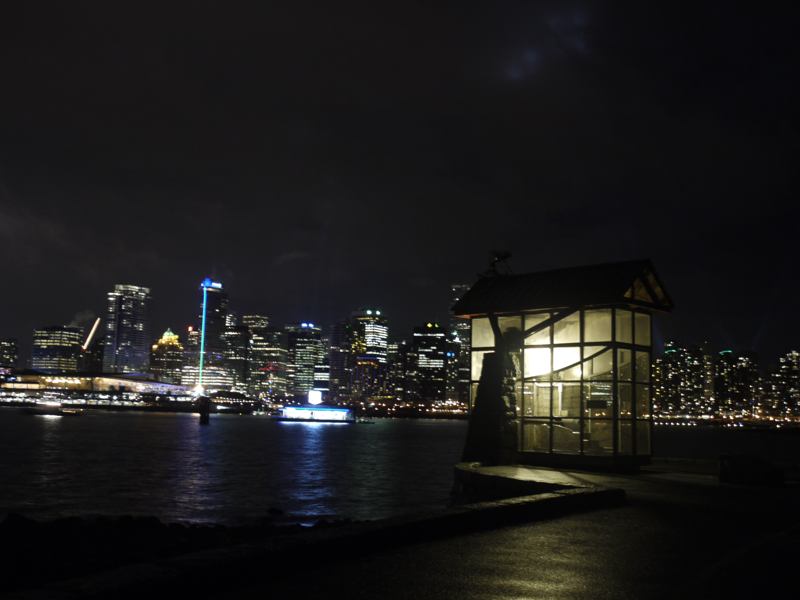
A clock tells people when. A calendar can tell them what to remember. In Vancouver in 2011, Sabine Bitter and Helmut Weber brought those two jobs together around an unlikely instrument: Stanley Park’s Nine O’Clock Gun. Their public artwork, A Sign for the City, gave the familiar report a changing historical dedication. The cannon did not have to become a different object to carry a different meaning. [1]
The gun already belonged to a history of public timekeeping. Vancouver’s Archives describes an earlier evening signal used to help ship captains set their chronometers. Because sound reached different parts of the harbour at different moments, captains watched for the flash. In that account, the gun succeeded a signal made by the Brockton Point lighthouse keeper. The practical question was how to share a precise moment across water. [2]
Where is this place?
Nine O’Clock Gun at Hallelujah Point, Stanley Park, Vancouver — landmark context, not a current artwork trail. This map locates the town or region, not a verified exact historic event site.
A monument with many addresses
The artists’ project asked what that moment might stand for. A contemporary announcement dates its run from May 2011 to April 2012. Each day’s sound was linked symbolically to a person or event in Vancouver or British Columbia history. A calendar supplied the explanation; the bang alone could not tell a listener whose anniversary had arrived. [3]
Its paper parts travelled farther than the gun. The city’s registry records twelve transit-shelter poster designs, twelve full-page newspaper advertisements in The Georgia Straight, calendar notebooks and a website. Research was credited to Kim Duff, Donato Mancini and Lorinc Vass. This was a commissioned public-art project, not an unofficial renaming of the cannon. [1]
The August 2011 announcement listed poster positions on streets including Commercial Drive, Dunbar and Kingsway. It also directed readers to free calendar booklets at galleries. Those are historical distribution details, not places where the work is promised today. They reveal its unusual geography: the sound began at the waterfront, while its explanation could meet someone waiting for a bus elsewhere in the city. [3]
The listener could turn another page
Writing in C Magazine that winter, Jesse Birch described a dayplanner whose mostly blank pages paired a historical entry with a day and month, without fixing it to a particular year. The events he reproduced included the beginnings of Vancouver’s Co-operative Radio. A community taking to the air could occupy this calendar alongside other kinds of civic history. [4]
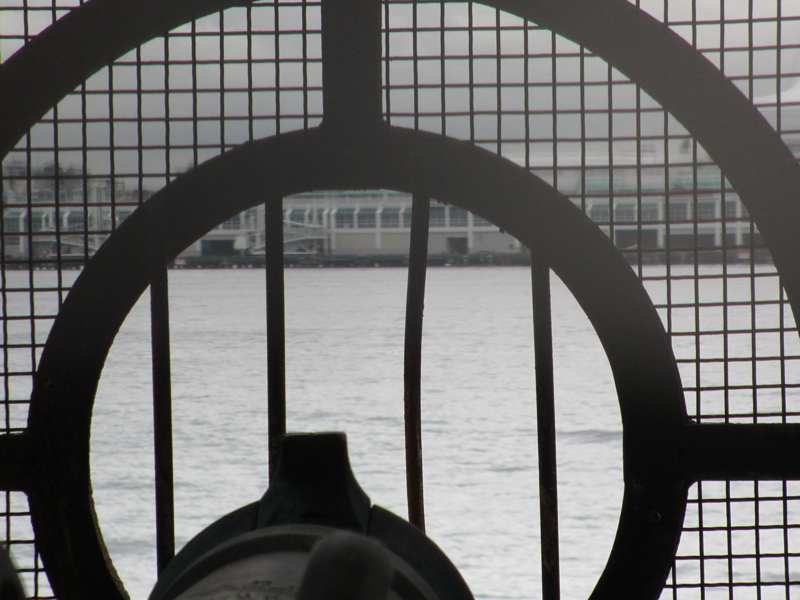
Birch also described hearing the gun on one date while thinking about an entry for another. His account is one reader’s response, not a survey of Vancouver’s listeners. But it catches something a permanent inscription cannot easily do: a reader could keep a different page in mind. The shared signal did not require everyone to remember the same thing. [4]
The city now lists the temporary artwork as no longer in place. That status concerns the artwork’s listed locations, not a claim that the gun has disappeared. [1] What remains in these records is a way of working with a landmark without adding another pedestal: keep the familiar signal, and give people more than one story to hear in it.