In April 2024, Bangor’s water district canceled the year’s tours of the Thomas Hill Standpipe. The announcement concerned a familiar pleasure: climbing to the promenade and looking out over the city. But the district’s interim general manager told the Bangor Daily News that the planned work would not affect the standpipe’s daily function. [1]
The view could close without the building becoming a retired water tower. That distinction is easier to understand once the white cylinder is read as two structures, not one.
Where is this place?
Thomas Hill Standpipe, Bangor — geographic context, not current visitor access or maintenance guidance. This map locates the town or region, not a verified exact historic event site.
Follow the windows
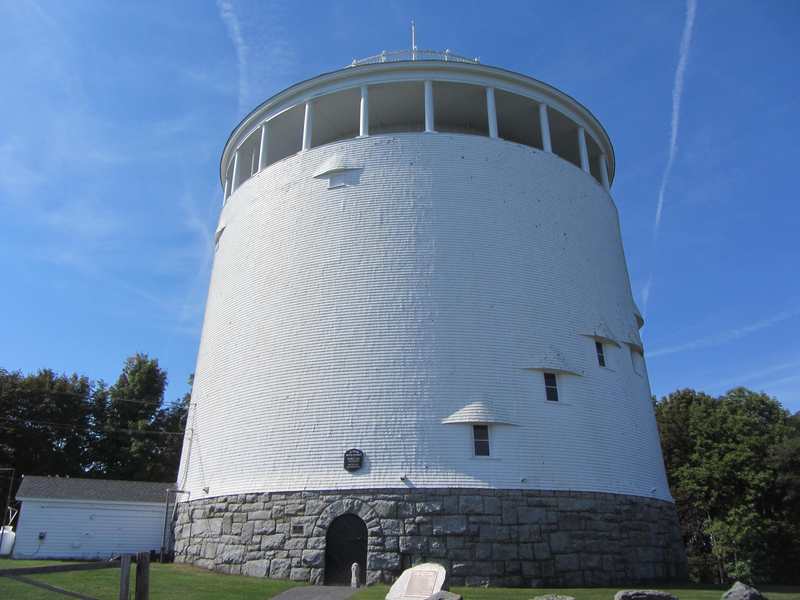
David Wilson’s photograph from September 2012 shows small hooded windows stepping upward around the shingled wall. They are clues to a route hidden behind it. The standpipe’s 1974 National Register nomination explains that the windows follow a winding stairway leading to the promenade deck. [2]
Inside the wooden enclosure is a riveted metal water tank. The staircase occupies the space between the tank and the outer shell. The deck then circles the building above. Visitors were not climbing through the water-storage chamber, and the white facade is not itself the tank. [2][3]
The nomination also records an oil treatment inside the wooden enclosure against the tank’s moisture and condensation. The shell had practical demands of its own. [2]
A lookout was part of the idea
James H. Mundy’s nomination for the Maine Historic Preservation Commission identifies viewing Bangor as an intention of the late-1890s design. It cites an 1898 newspaper account celebrating the view. The lookout was not simply a later museum use fitted into obsolete infrastructure. [2]
Bangor Water District’s history supplies the less visible purpose: water storage for firefighting and help regulating pressure downtown. It dates its own ownership to 1957, when the district was formed separately from the city. The same history records changes to the exterior, including replacement of the old crown lighting with LED units in 2014. A recognizable outline need not mean every component remained unchanged. [3]
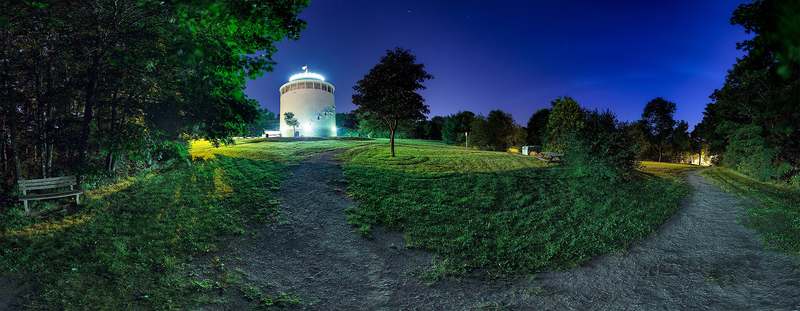
Thomas Cummins’s night panorama, published in October 2016, shows the illuminated crown in its wider setting. Like Wilson’s daylight view, it records the building’s outward presence. Neither photograph demonstrates water levels, mechanical condition or present-day public access.
Two responsibilities, one landmark
Kathleen O’Brien’s 2024 report says maintenance and repairs had been identified during an insurer’s survey. It does not identify the necessary work in detail. The reported cancellation should not be expanded into an invented diagnosis of the tank, or treated as an announcement that water storage had ceased. [1]
When checked on 29 October 2026, the district’s standpipe page still carried a tour-cancellation notice while describing the structure as continuously used since completion. Those are the operator’s published statements, not an independent engineering inspection or a promise about reopening. [3]
The two records belong together: a place built to let people look across Bangor was also built to do something for the city when nobody was admiring the view. The staircase explains the visible invitation. The enclosed tank explains why a canceled tour did not tell the whole story.