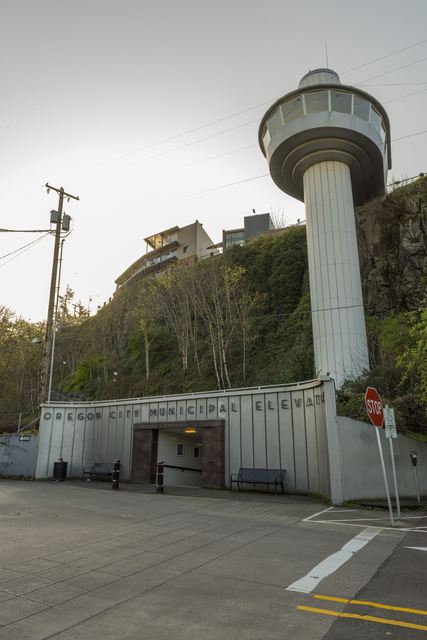
In August 1915, Oregon City’s engineer proposed an extra job for the town’s new public elevator. A fire nozzle at the top, like those used on fireboats, could help fight blazes downtown. The same water supply intended to lift passengers might also send water back toward the streets below. [1]
The Oregon City Courier reported the idea at the end of a piece about connecting the elevator to hydraulic power. Engineer Miller recommended a dedicated main from the receiving reservoir, with equipment to control the pressure shocks the lift might cause. Then came the additional possibility: a revolving nozzle on the tower, supplied from that main. [1]
Where is this place?
Oregon City Municipal Elevator, Oregon — landmark context, not historical nozzle location or current access guidance. This map locates the town or region, not a verified exact historic event site.
It is an arresting image—but the newspaper describes a proposal, not a completed firefighting installation. The distinction keeps an ingenious suggestion from becoming a false account of what the elevator actually did.
A journey shared with the water system
Oregon City had a transport problem shaped by its geography. The business district lay below a steep bluff; homes and other destinations extended above it. The city’s own history describes the stairs residents had used before the first steel-and-wood elevator entered service in 1915. [2]
Choosing water power linked that journey to another municipal service. The Water Board objected to connecting the lift because it feared harm to the water system. According to the city’s account, the operating elevator did generally lower water pressure nearby. What looked like a short vertical trip was also a demand on a network extending beyond the tower. [2]
A November 25, 1915 Courier report brings that connection down to the level of an awkward early ride. It said the lift was carrying passengers but had not reached its intended speed. Air entering with the water was being blamed for reducing the pressure that drove it. This was contemporary reporting about the first elevator, not a diagnosis of the present machine. [3]
The later tower changed more than the machinery
The old lift converted to electric power in the early 1920s. Its replacement arrived in 1955, with a different arrangement for pedestrians as well as a new appearance. [2][4]
The National Register nomination explains that the first tower stood west of the railway tracks; passengers crossed a high catwalk to reach the bluff. The replacement moved east of the tracks, closer to the cliff. A tunnel carried the approach beneath the railway instead. Gordon E. Trapp’s concrete design also provided a horseshoe-shaped observation deck around the shaft. [4]
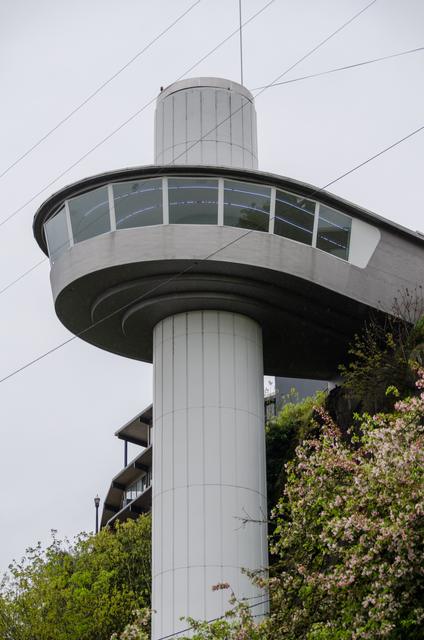
That deck made the destination more than the end of a ride. In its discussion of recreation, the nomination distinguishes the view from the transport function: an observatory was not required simply to move people uphill. [4]
The fire nozzle imagined in 1915 and the observation deck built forty years later were not one continuous design programme. They were different ideas about what else an elevated public structure might offer. One survives here as a newspaper proposal; the other became part of the building.
Oregon City’s elevator is easy to recognise by its rounded top. Its less visible history runs through pipes, pressure, railway crossings and choices about how a town’s services meet. Read as a proposal, the fire nozzle opens a window onto the ambitions attached to an earlier, very different lift.