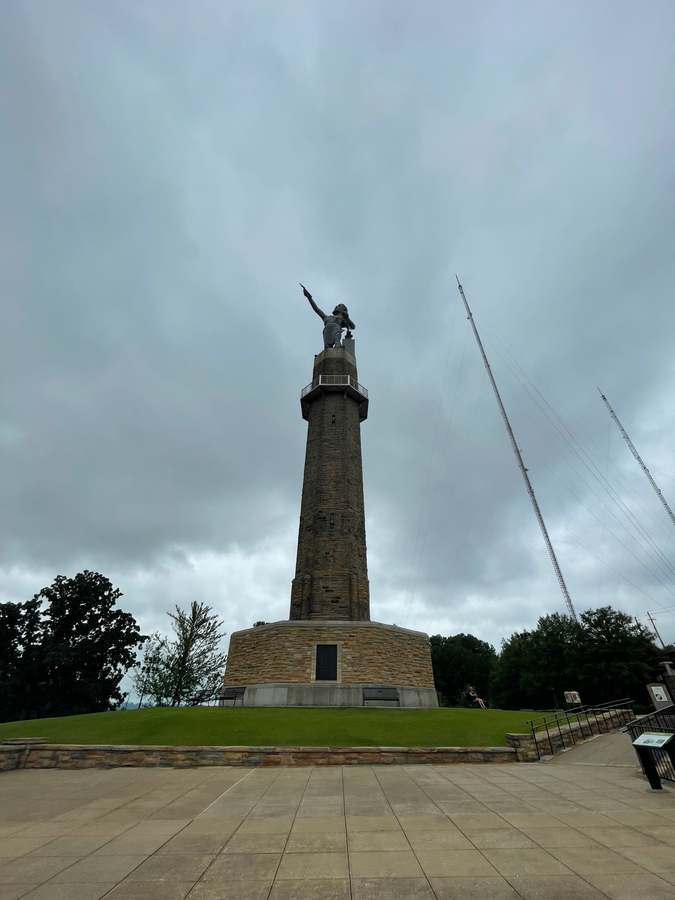
In 1994, a restoration study found that the concrete inside Birmingham’s Vulcan was damaging the iron it had been added to stabilize. The filling, poured into the lower part of the statue in 1939, expanded at a different rate from the cast-iron shell. Water entering through an opening in the head added freeze–thaw stress. The iron was cracking and flaking, and the fasteners holding the pieces together were corroding. [1]
Giuseppe Moretti’s figure had been made for the 1904 St Louis world’s fair. Its construction was already an exercise in dividing a giant into manageable pieces: the statue was cast in fifteen parts, then bolted together from within. [2] Decades later, Robinson Iron’s pre-design team proposed taking it apart again. Their plan called for removing the concrete, repairing or recasting damaged iron, and assembling the pieces around a stainless-steel support frame anchored to the tower. [1]
Where is this place?
Vulcan Park, Birmingham, Alabama. This map locates the town or region, not a verified exact historic event site.
Ricky Robinson described the work in a 2017 interview with Business Alabama. The restoration, completed in 2003, required his company to remove the filling, repair cracks and design a new internal structure before returning Vulcan to its pedestal. [3] Some outward details also had to be recovered: the missing spear point and hammer were recreated from historical photographs. [2]
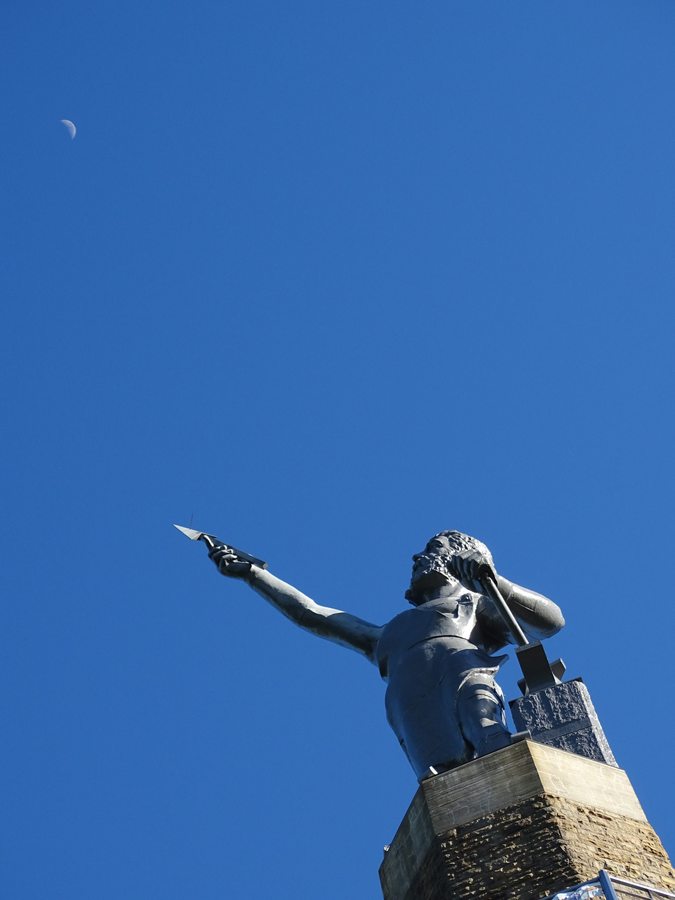
Robinson remembered a practical complication beyond the metalwork. Television stations stood nearby on Red Mountain, leaving the highly visible job under constant observation. The crew could not simply get on with the difficult parts out of public view. [3]