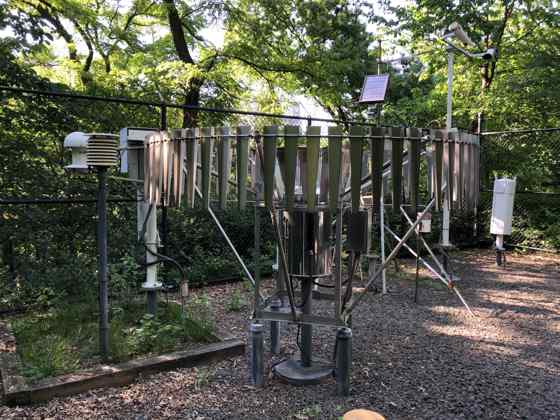
On 1 November 1995, an Automated Surface Observing System became Central Park’s main source of weather observations. It did not, however, supply a snowfall measurement. Keeping that part of the record required a person, not just the instruments behind a fence south of Belvedere Castle. [1]
The castle had not been designed as a laboratory. It began as an open-air lookout on Vista Rock, overlooking the reservoir that preceded the Great Lawn. Windows and doors enclosed it for the Weather Bureau in 1919; the official Central Park observing site moved from the Arsenal to the castle on 1 January 1920. [2][3]
Where is this place?
Belvedere Castle, Central Park, New York — weather-station context, not permission to enter the instrument enclosure. This map locates the town or region, not a verified exact historic event site.
Automation had already changed the building’s working life decades before ASOS arrived. In 1961, readings from the largely automated equipment went to a display at the Weather Bureau’s office in Rockefeller Center. Staff no longer occupied the castle full-time. Bureau employees still came to measure snow. [1]
The later move of the Weather Service’s city office to Long Island made that remaining task harder to organize. Staff travelled from Brookhaven and Newark when readings were needed. The Central Park Zoo also took measurements and became the principal snow-measuring site in the late 1990s. In December 2015, the Conservancy took over that work again. [1]
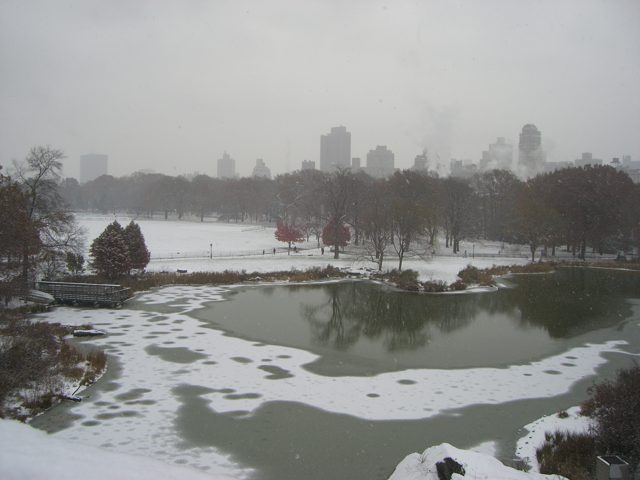
In its Fall 2023–Winter 2024 newsletter, the National Weather Service recognized the Conservancy’s snow readers alongside the technicians maintaining the automated system. The observers supplied snowfall readings to accompany other measurements from ASOS. The newsletter also recalled the station’s 2021 recognition as a World Meteorological Organization Centennial Observing Station. [3]
On 23 February 2026, the Conservancy issued a statement about crews clearing paths after a snowstorm. It also noted another part of the organization’s work: reporting snow measurements to the National Weather Service. [4]