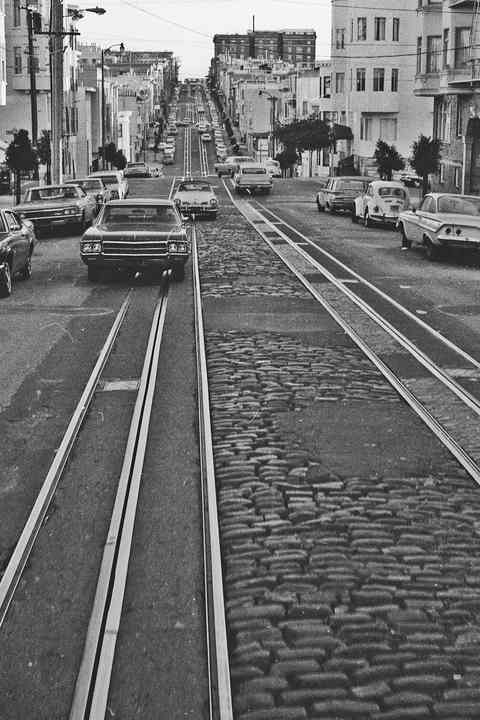
In George Garrigues’s December 1970 photograph, cable-car rails run down a San Francisco hill and rise again beyond the traffic. The narrow slots between them are visible; the moving rope that makes the system work is not. Nor can the photograph show the join in that rope. A cable-car ride depends on a connection that belongs to the workshop as much as to the street. [1]
In a 2021 account of its maintenance work, the San Francisco Municipal Transportation Agency paired cable-splicing photographs from 1947 and 2014. The comparison was not just about old clothes and newer ones. It described joining one end of the cable to the other as work still done by hand. The continuity lay in a practical skill, alongside the separate task of keeping the winding machinery running. [1]
Where is this place?
San Francisco Cable Car Barn, 1201 Mason Street — workshop context, not public access to maintenance areas or current service guidance. This map locates the town or region, not a verified exact historic event site.
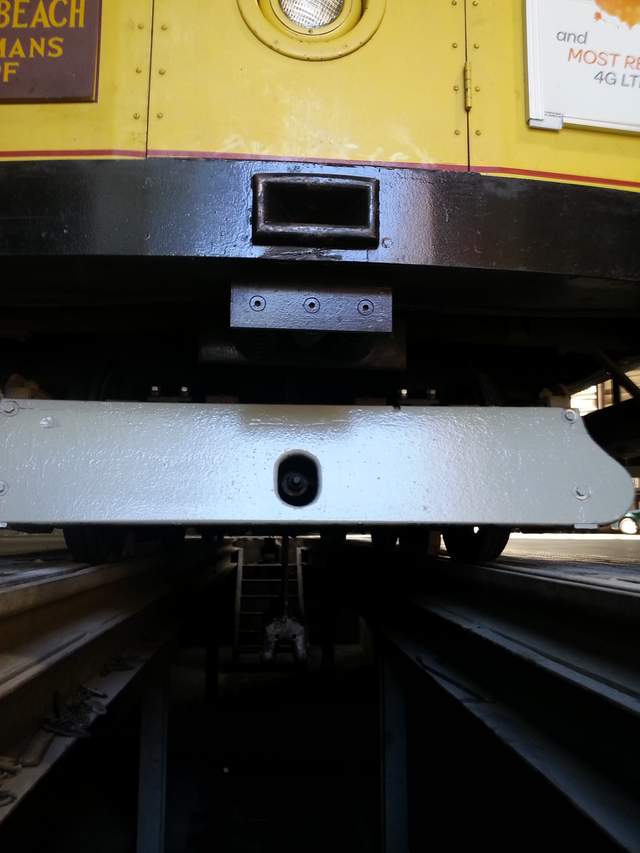
The distinction is easier to grasp from below. HaeB’s 2013 photograph looks beneath a car over a maintenance pit, showing its grip without a cable in place. It is a view of a component, not of a splice being made. The rope and the vehicle are separate things that must work together; caring for the polished car alone would leave much of the transport system unaccounted for. [1]
The city’s job specification for a wire-rope cable maintenance supervisor makes that hidden work unusually concrete. Its experience requirement includes installing, repairing and long-splicing traction cable. Electrical-wire, telecommunications and fibre-optic splicing experience does not qualify. The same specification calls for maintenance schedules, repair records, replacement planning and an inventory of cable and machinery parts. This is not merely a picturesque craft preserved for demonstration: it has work orders. [2]
Continuity does not mean every part is old. SFMTA’s gearbox-rehabilitation record describes equipment in service since 1984 at the Cable Car Barn, 1201 Mason Street, with completed project stages running from 2017 to 2019. Its 2026 incident log supplies a less ceremonial reminder of the moving system’s needs: on 23 October, the California line stopped from 8:14 p.m. through the end of service for a cable-splice check, with buses substituting. A check is not proof that the cable broke. [3, 4]
The familiar street scene and the workshop records describe the same landmark from different sides. One offers the curve of rails over a hill; the other names the skills, spare parts and interruptions needed to keep vehicles moving along them. The hand-made join is part of that history—not because it remains untouched, but because somebody has to know how to make it again.