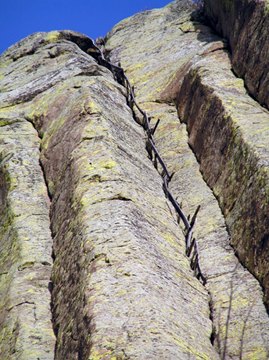
The wooden ladder in a crack on Devils Tower no longer begins at the bottom. Its lower section was removed after it deteriorated. In 1972, the National Park Service restored part of what remained above. [1]
That surviving fragment once belonged to an elaborate Fourth of July attraction. In 1893, ranchers William Rogers and Willard Ripley built a stake ladder on the Wyoming formation’s southeast face. Ripley did most of the construction; Rogers and Ripley’s father cut and hauled material. A pulley lifted supplies to the man working above them. The ladder reached a sloping area known as the Meadows, not the summit itself. [2]
Where is this place?
Devils Tower National Monument, Wyoming. This map locates the town or region, not a verified exact historic event site.
For the advertised July 4 ascent, the arrangements on the ground mattered too. Linnie Rogers and Dollie Ripley organized food, drink, and accommodation for the spectators’ horses. The handbill promised speakers and dancing. Rogers climbed wearing an Uncle Sam costume and carried a flag to the top. [2]
Others subsequently used the ladder. The park identifies the stunt performer Babe White’s 1927 ascent as its last known use. Its later partial restoration preserved an object from that climbing history, without recreating the missing lower approach. [1, 2]
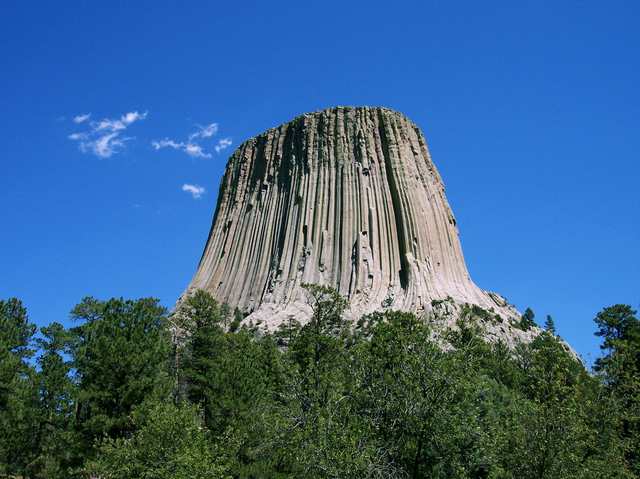
The Tower’s significance did not begin with that spectacle. The park’s climbing guidance recognizes the site’s longstanding sacred importance to American Indian peoples and concerns that some hold about recreational climbing. Its voluntary June closure grew from a working group that included Indigenous and climbing-community representatives. [3]
The surviving ladder is visible from below; the park recommends binoculars or a camera zoom to pick it out. [1]