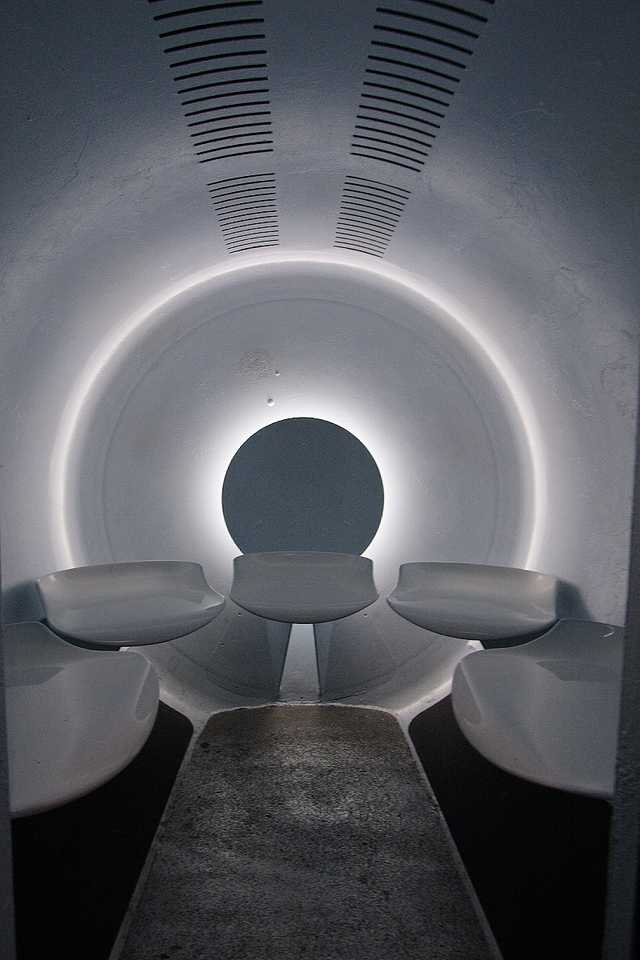
A smoother ride was possible inside St. Louis’s Gateway Arch. That was not the only thing its keepers wanted. When a new leveling control arrived in 2001, they retained the tram’s familiar tilting sensation rather than remove it. According to the National Park Service, the movement had become part of the monument’s character. [1]
Dick Bowser’s design had to take people up a curve without making them sit at the same angle as the track. His scale model, described by the Gateway Arch Park Foundation, showed a car rotating inside a metal ring to keep its passengers level. The problem was more intimate than the skyline suggests: five seats share each small capsule. The NPS compares the gentle pivots to a Ferris wheel. [2][3]
Where is this place?
Gateway Arch, St. Louis, Missouri — landmark location, not entry to restricted maintenance areas or current ride guidance. This map locates the town or region, not a verified exact historic event site.
Keeping that experience did not mean keeping every mechanism. The 2001 control replaced mercury-filled mechanical levelers and could make the adjustments too smooth for riders to notice. Preserving the tilt was therefore a choice made with newer equipment, not proof that nothing inside the stainless-steel landmark had changed. [1]
Nor was the first passenger experience a finished object waiting to be frozen. In a recorded recollection received by the park historian in 1996, Bowser described the north tram opening with temporary plywood over unfinished boarding steps and flooring. Ropes on portable stands guided the queues. He remembered a plain, noisy observation area, without the later carpet and ceiling. This was the designer looking back, not a contemporary inspection report; his account makes the early ride sound decidedly provisional. [4]
Other changes were meant to be noticed. During winter 2011–12, clear Lexan doors replaced the old combination of plexiglass and metal, opening more of the Arch’s interior to passengers’ eyes. This was a change to the ride, not an enlargement of the summit’s viewing windows. The NPS dates a separate motor-system modernization to 2015–17. [1]
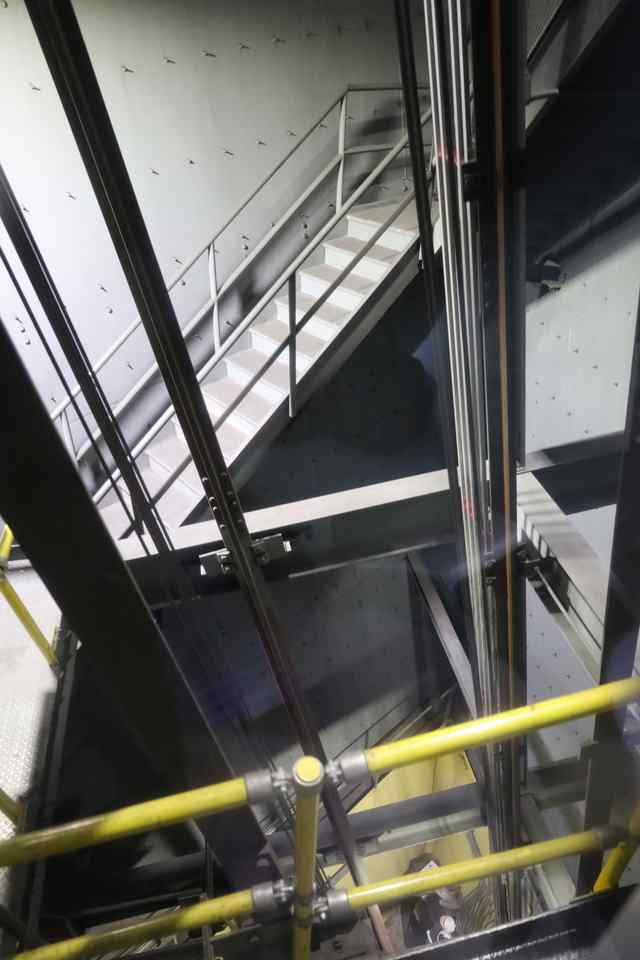
An engineering profile published during that project explains a less visible ambition. In 2015, the National Society of Professional Engineers described Maida Engineering’s plan to move new drives and controls into rooms within the Arch’s legs, away from the cramped area under the observation deck. New service-elevator stops would help workers reach them. Those were design intentions in a project still under way, not a later audit of its performance. Read beside the preserved tilt and clearer doors, they suggest three different decisions inside one monument: what passengers should feel, what they should see, and what maintenance staff should be able to reach. [5]