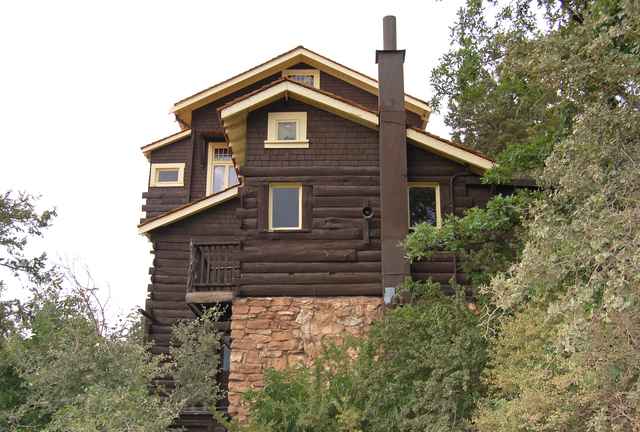
At Kolb Studio, a window did not have to need repair to enter the record. Conservators numbered and photographed windows—including those requiring no repair. A building famous for making photographs had become their subject. [1]
The studio stands beside Bright Angel Trail on the South Rim in Arizona. It is not a single neat box: rooflines, windows and different wall coverings accumulate above the canyon edge. The 1975 Grand Canyon Village Historic District nomination described a photographic studio and darkroom enlarged by an eastward extension in 1914, then an auditorium and more living space in 1926. Its inventory distinguished split-log planks, shingles and horizontal siding. Preserving the building meant dealing with this assembled fabric, not making every wall look alike. [2]
Where is this place?
Kolb Studio, Grand Canyon Village, Arizona — building context, not a current access or safety guarantee. This map locates the town or region, not a verified exact historic event site.
Preservationist Ben Isaacson explained the window work in a first-person account published by the National Park Service in autumn 2014. His Western Center for Historic Preservation team was documenting more than obvious decay. Examination of glazing and caulking revealed earlier repairs for which they found no record. Photographs taken at several stages could give later conservators something their predecessors had not left them. [1]
Other repairs were visible from outside. In Terri Attridge’s photograph from the 2013–14 renovation series, scaffolding crosses the façade and new-looking shingles interrupt darker surfaces. The Grand Canyon Conservancy’s accompanying account explains the choice behind such work: retain existing siding with better fasteners where possible; otherwise shape replacement pieces by hand to match. That is a method of selective repair, not evidence that everything visible is original. Nor does this photograph show the window-numbering records themselves. [3]
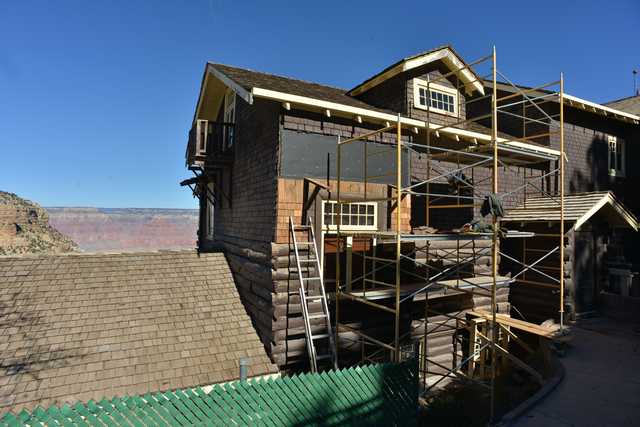
After finishing its on-site portion in March 2014, Isaacson’s team was preparing a window assessment and completion report identifying future work. The record continued after the scaffolding work stopped. [1]
The Park Service’s history remembers the Kolb brothers photographing mule riders from a small toll shack that grew into a home, theater and studio. Those pictures helped visitors carry away evidence of a journey. The later conservation photographs served a less glamorous purpose: helping someone understand what had happened to a window. At a place built around images, the repair record became another reason to take them. [1][4]