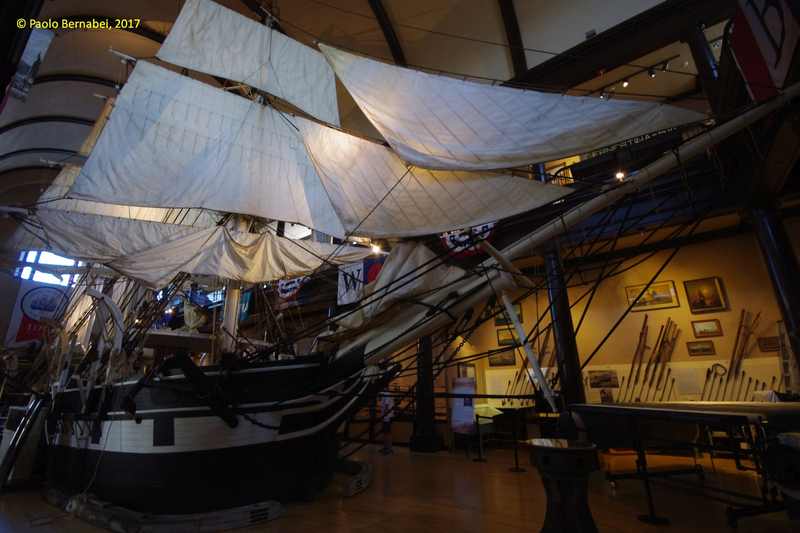
The contract to build New Bedford’s half-sized Lagoda went to a house-builder. Frank B. Sistare hired ship-workers for the job, according to assistant curator Arthur C. Watson’s 1924 account of the museum’s exhibits. Whaling craftspeople were already becoming scarce. [1]
The model had a building made for it. In 1916, Emily Howland Bourne presented the Bourne Building to the Old Dartmouth Historical Society in memory of her father, whaling merchant Jonathan Bourne. The museum had previously moved into a former bank; the new gallery was designed around the model of his ship and other whaling objects. [2]
Where is this place?
New Bedford Whaling Museum. This map locates the town or region, not a verified exact historic event site.
Designer Edgar B. Hammond had to assemble his evidence. Watson says no photographs or earlier models of the Lagoda had been found at the time. Measurements survived at the New Bedford Custom House. The similar Charles W. Morgan was still tied up at a Fairhaven wharf. [1]
People supplied more. Captain Edward D. Lewis, who had commanded the Lagoda on three voyages, and his wife, who had spent years aboard with him, gave Hammond information. Shipbuilder William H. Crook, who had worked on the original vessel, oversaw construction of the model. [1]
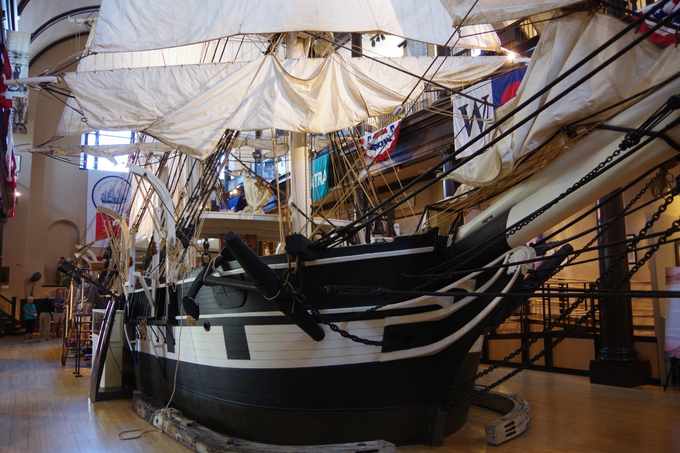
Its small boats were made separately. Joshua Delano built the half-sized whaleboats, each fourteen and a half feet long; the sail-loft firm Briggs and Beckman made the sails. The equipment was reduced in scale along with the hull. [1]