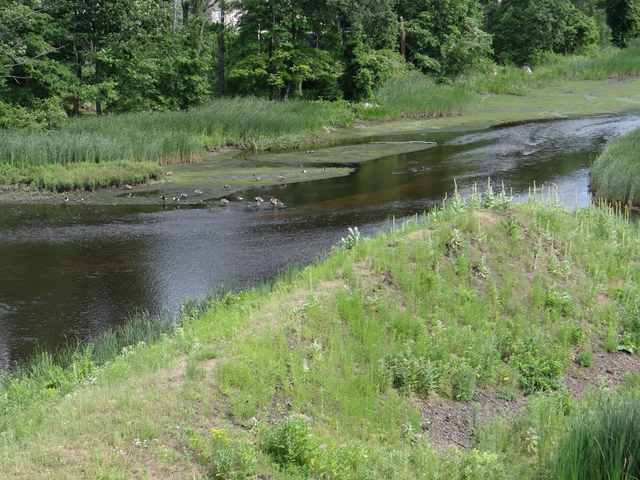
In September 2010, a minnow trap beside Saugus Iron Works’ turning-basin dock caught a juvenile jack. It was photographed and released. The photographs suggested two possibilities—a blue runner or a crevalle jack—but did not settle the species. Experts consulted for the restoration study considered its appearance this far up the Saugus River unusual. [1]
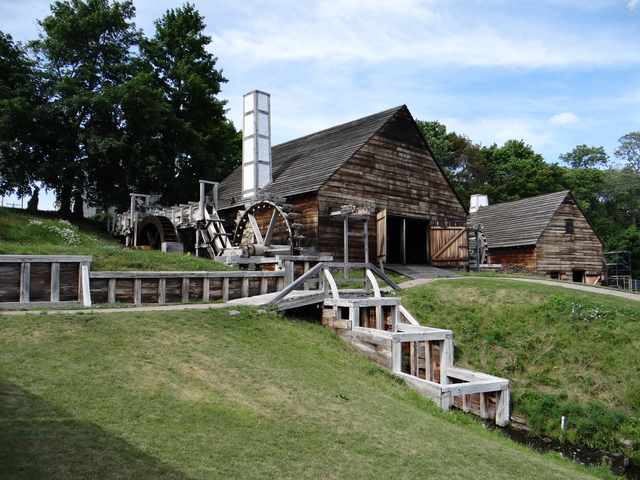
The Massachusetts site preserves a reconstructed industrial waterfront. Archaeologist Roland Robbins’ excavations between 1948 and 1953 informed the rebuilding of the blast furnace and forge; the reconstructed works opened in 1954. Their waterwheels recall a river that powered iron-making equipment, while boats once carried finished iron downstream. The river beside the buildings was also part of the exhibition. [1][2][4]
Where is this place?
Saugus Iron Works National Historic Site. This map locates the town or region, not a verified exact historic event site.
By the 2000s, silt and invasive plants had filled much of the turning basin. Restoration begun in 2007 reopened water, replaced waterfront structures and removed unwanted vegetation. A rock weir downstream, built in 1954 to hold water at the ironworks, came out in autumn 2009. The park’s annual report credits partners including the Saugus River Watershed Council and the town with helping secure its removal. [1][3]
University of Rhode Island researcher Mary-Jane James-Pirri’s 2013 report followed more than the conspicuous visitor. River samples showed a shift towards fish associated with brackish and estuarine water, with mummichogs becoming more prominent. Young American eels dominated the turning-basin catches. She identified increased upstream movement of salty tidal water as a likely major influence on the changing community. [1]
The restored waterfront still required work. The park’s 2019 foundation document recorded sparse vegetation in an area functioning more as mudflat than marsh, continuing sedimentation in the basin and water-quality problems. Its planning list called for a stewardship strategy with particular attention to continued dredging. [2]