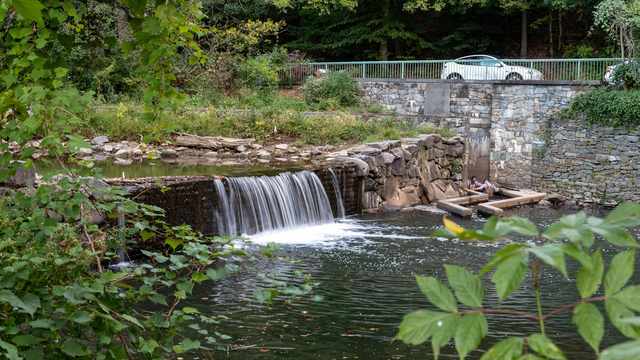
In 1936, the Civilian Conservation Corps added eight inches to the boulder dam beside Peirce Mill in Washington, D.C. The National Park Service had considered replacing it with a historically accurate millpond and timber dam. That cost too much, so the scenic waterfall stayed—and became taller, according to the Friends of Peirce Mill’s illustrated history.[1]
It was not the dam that had supplied the nineteenth-century millpond. That structure, made from stacked logs, stood farther upstream and washed out around 1900. The boulder dam was built closer to the mill in the early 1900s.[1]
Where is this place?
Peirce Mill, Washington, D.C.. This map locates the town or region, not a verified exact historic event site.
By then, the mill’s main shaft had broken and the building had become a teahouse. Park managers wanted a cascade that its customers could see and hear. The dam created that attraction, but also blocked fish travelling upstream to spawn.[2]
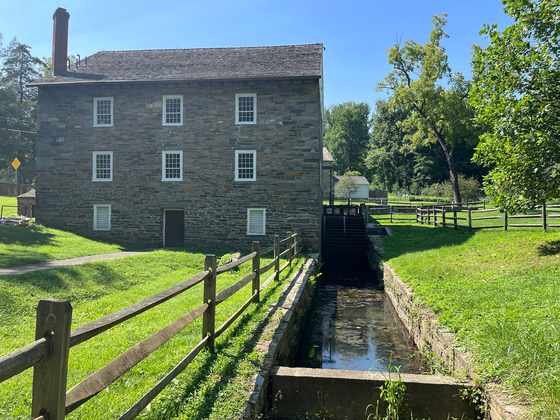
In 2006, a Denil fishway was installed on the dam’s east side. Baffles inside a concrete channel let fish ascend past the barrier. The channel runs between stone walls beside the waterfall; the park’s interpretive panel points out its entrance and exit.[3]