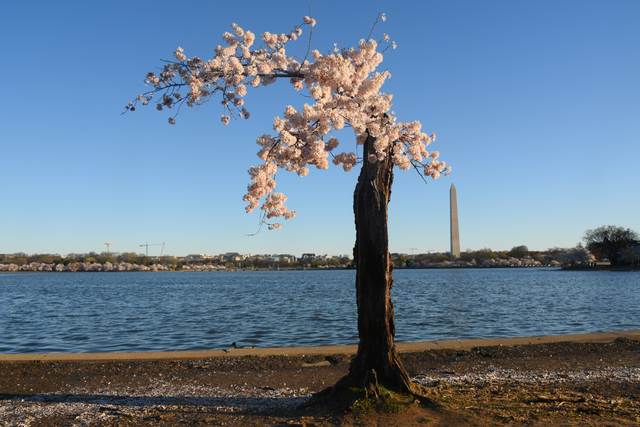
The new trees carried Stumpy’s genes, but they were not expected to repeat its hollow, battered shape. In April 2026, National Arboretum horticulturist Piper Zettel told WTOP that the original cherry’s unusual growth had developed under repeated tidal flooding. Its propagated replacements were growing in very different conditions. [1]
Staff had taken young growth from the Tidal Basin tree in 2024 and placed it in a well-drained growing medium. In a greenhouse with controlled temperature and humidity, the cuttings formed roots within eight weeks, Zettel said. By the time of the interview, the small Yoshino cherries had flowered. They were genetic matches grown from living shoots, not seedlings raised from cherry stones. [1]
Where is this place?
Tidal Basin, Washington, D.C. — original tree’s setting. This map locates the town or region, not a verified exact historic event site.
Moving the original tree had been ruled out. In its April 2024 explanation of the seawall works, the National Park Service described a tree weakened by brackish flooding, sun damage, compacted soil and fungi. Its arborists pruned dangerous dead portions, but the agency judged that the remaining structure could not survive transplantation. The plan instead was to propagate living sections with the Arboretum. [2]
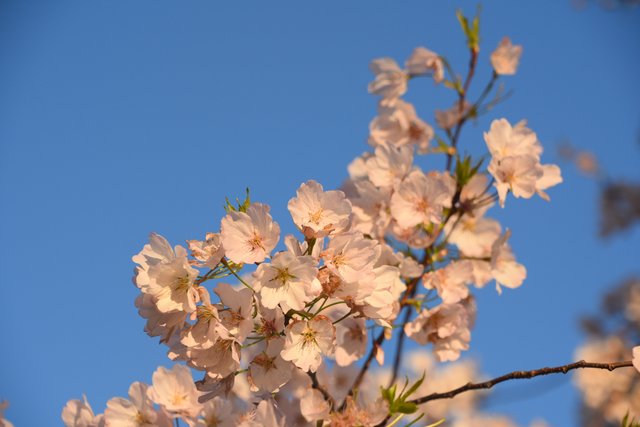
Successful rooting was not the same as readiness for the waterfront. Zettel said in the April 2026 interview that the new trees were not yet ready for a national park receiving more than a million visitors a year. Arboretum staff and Park Service foresters still had to settle when and where they would be planted. [1]