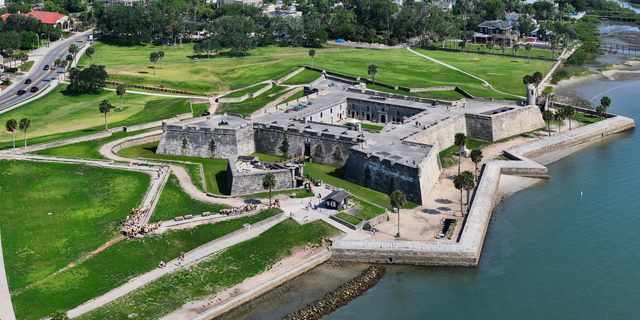
A programmable calculator and cassette drive sat in an artifact storeroom at Castillo de San Marcos. A 1987 research paper describes how this equipment collected readings from probes inside the St. Augustine fort’s west wall. [1]
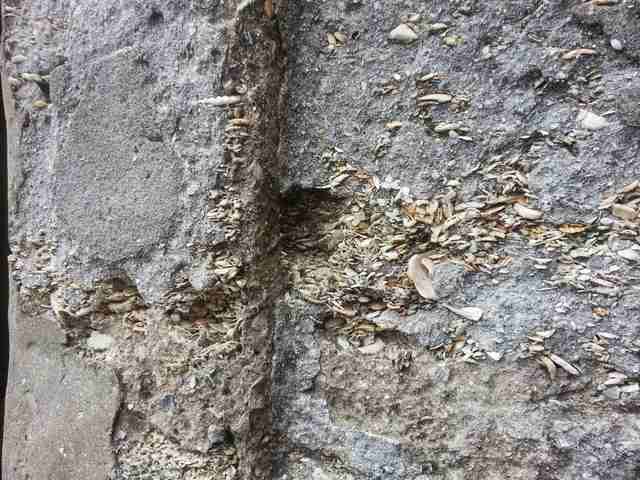
The stone was coquina: fragments of shells held together by calcium carbonate. Its pores helped the fort absorb cannon impacts, but that military reputation did not make it immune to decay. [2] Later preservation accounts describe disintegrating stones, failed mortar joints and hollows where water collected. [3]
Where is this place?
Castillo de San Marcos, St. Augustine, Florida. This map locates the town or region, not a verified exact historic event site.
Dennis B. Fenn’s moisture-and-temperature study used 16 probes in seven drilled holes. Combining the two measurements reduced the need to penetrate more historic material. The system read each probe every six hours, saving data on magnetic tape and printing it on paper tape. [1]
Crack monitoring took a different approach. Engineer Todd Rutenbeck’s team chose mechanical dial gauges; inaccessible ones could be read through a tripod-mounted telescope. That avoided putting a ladder into the moat for every reading. [1]
The first six months showed many cracks widening, but the trend was moderating. The researchers wanted at least a year’s record to distinguish seasonal changes from progressive movement. This was an investigation in progress, not a final diagnosis. [1]
Later repairs addressed the stone and the materials touching it. In a project completed in spring 2008, preservation crews removed incompatible modern cement repairs from the wall tops and used lime mortar. They replaced coquina only where necessary, drawing new stone from near the original quarrying area. The park explicitly says the work was not intended to make the fort look better. [3]