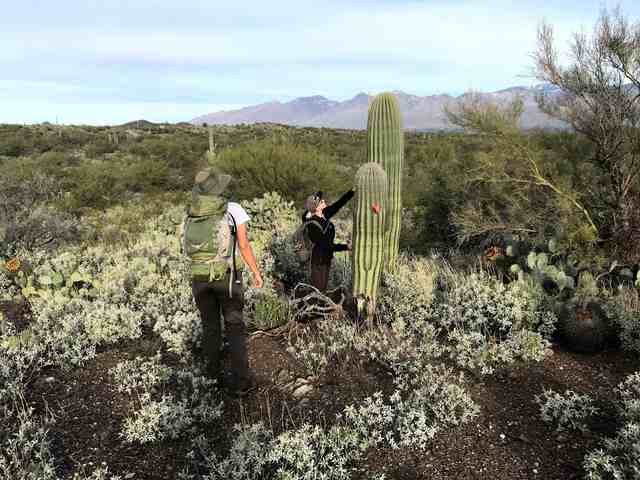
A survey crew could cross a patch of desert, flag its saguaros and still leave work for the next team. During Saguaro National Park’s 2020 census, a separate crew made another pass to find cacti the first group had overlooked. [1]
The search could become competitive. In Jennifer Shopland’s account of a Western National Parks Association volunteer day, teams earned points for finding the tallest and smallest saguaros—and lost them for confusing a young saguaro with a hedgehog cactus. Maria DelVecchio found one small plant beneath a palo verde tree. Her group marked it, recorded its position and measured it with a folding ruler. Park intern Jesús Duenas wrote down the result: 10.2 centimeters. [2]
Where is this place?
Saguaro National Park, Arizona — park context. This map locates the town or region, not a verified exact historic event site.
The census used 45 plots established in 1990, each 200 meters square, across the park’s two districts near Tucson. Rather than attempting to count every cactus in the park, researchers returned to those survey areas. In 2020, all 45 were fully surveyed; some earlier rounds had sampled fewer plots or extrapolated from smaller areas. [1]
Volunteers worked in small, intern-led teams. They recorded locations and heights, with clinometers for plants too tall for the folding rules. The smallest plants presented a different problem when comparing decades: researchers excluded saguaros under ten centimeters from comparisons with 1990 and 2000, because those earlier surveys had not sampled them. [1]
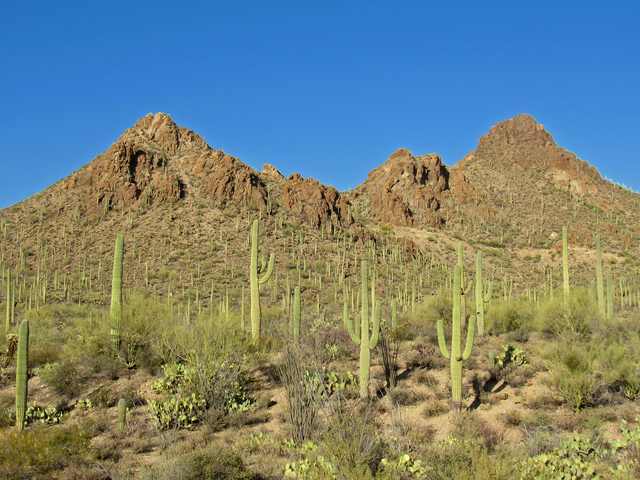
On the association’s volunteer day, the final pass had another purpose. The team went back through Plot 28 to remove the pin flags and boundary markers it had used to keep track of the search. [2]