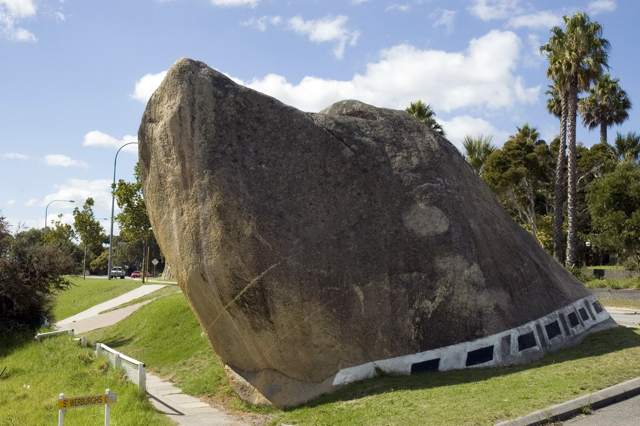
The black rectangles around Albany’s Dog Rock look like the markings on an enormous collar. In photographs taken in 2006 and 2019, the painted band helps turn a granite profile into an instantly recognisable animal. But the City of Albany’s heritage record gives the paint another job: making the rock easier to see at night on the bend of Middleton Road. The resemblance and the warning occupy the same strip of stone. [1]
The rock itself is not a carved monument. Its familiar silhouette is a natural outcrop beside a road, pavement and houses. That location has repeatedly complicated its survival. In a 2021 ABC report, local historian Malcolm Traill traced a removal proposal to 1921, when widening the road appeared to require sacrificing the landmark. The report describes public meetings, letters and resistance to the plan—not simply a town always agreeing about its favourite rock. [2]
Where is this place?
Yakkan Toort/Dog Rock, Albany, Western Australia — public landmark context, not climbing or road-crossing advice. This map locates the town or region, not a verified exact historic event site.
The collar does not settle the larger question of what the place means. The heritage entry records its nomination in 2000 by the Albany Aboriginal Corporation among places endorsed by the Menang Noongar community. It names the site Yakkan Toort/Dog Rock and recognises its place in a wider cultural landscape. That significance is not an embellishment added to a tourist attraction. [1]
The ABC’s reporting also gives space to Menang elder Vernice Gillies, who described her personal attachment to the rock and its connections to stories and people beyond Albany. Her account makes the dog-shaped outline part of a living relationship with place, rather than merely an object for visitors to photograph. These are her published remarks, not an interview conducted for this article. [2]
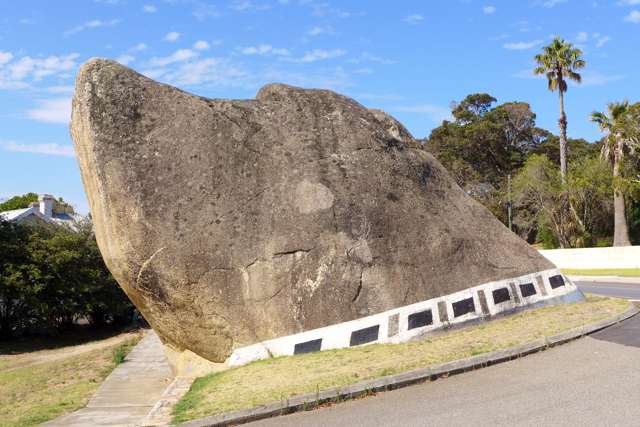
A council agenda dated 22 June 2021 shows another kind of work around the landmark. Yakkan Toort/Dog Rock appears among the places proposed for dual naming. The accompanying report describes community endorsement for recognising Menang names alongside existing European ones, rather than replacing those names. An agenda records the proposal and its reasoning; it is not, by itself, evidence of the final vote or when a sign was installed. [3]
The painted collar was intended to make a roadside presence harder to miss. Recognising its names and cultural significance asks for more than visibility. Once the rock has caught the eye, whose knowledge helps explain what we are looking at?