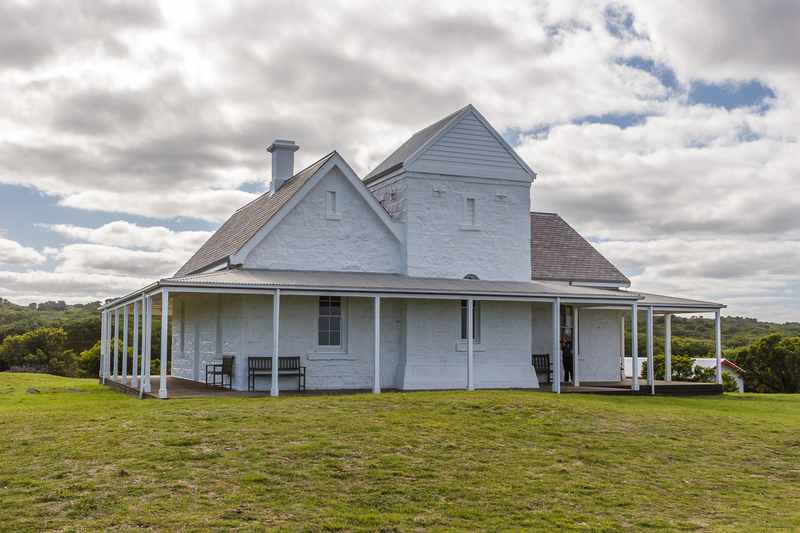
The first news was exciting—and wrong. On 25 January 1865, an announcement at Melbourne’s telegraph office reported that the Royal Standard had been signalled off Cape Otway after a remarkably quick voyage from Liverpool. By late afternoon, a telegram from Port Phillip Heads supplied a different identity: the approaching vessel was the Confederate warship Shenandoah. The next day’s Herald account, preserved among United States diplomatic papers, records both the announcement and its correction. [1]
The episode exposes two different achievements. News could arrive before a ship. Knowing exactly which ship was coming remained another matter.
Where is this place?
Cape Otway Telegraph Station, Victoria — station location, not the offshore positions of the ships. This map locates the town or region, not a verified exact historic event site.
Cape Otway’s telegraph station belonged to that gap between seeing something at sea and telling people elsewhere what it meant. Its undersea connection had proved short-lived, but the station’s usefulness did not depend entirely on a working cable across Bass Strait.
One building, more than one connection
The station was built in 1859. It contained operating rooms as well as accommodation for telegraph workers and their families: communications infrastructure was also somebody’s home. [2]
That year, a submarine cable connected Cape Otway with Low Head, near Launceston. Museums Victoria’s history describes the link as part of the network connecting the south-eastern colonies’ capitals, but also records its brief working life and eventual replacement in 1869. [3]
The later accounts describe its failure differently: the lightstation’s history says within six months, while Museums Victoria dates its operation to 1861. Neither summary supplies a complete sequence of faults and repairs; both describe a connection that proved short-lived. [2][3]
But a failed submarine cable did not make every other connection useless. Ships could exchange signals with the cape, and shipping information could travel onward to Melbourne. Parks Victoria’s 2009 management plan identifies all three functions: the Tasmanian cable link, signalling to ships and conveying shipping news. [4]
Flags first, electricity next
The lightstation’s history reproduces an account by Mary Anne Bedford, arriving aboard the Champion of the Seas in 1864. Her captain raised flags; the shore answered. News came back about another vessel, while word of their own approach was telegraphed to Melbourne. [2]
Bedford expected the news to arrive in four minutes—not a timed test, but a passenger’s account of the system’s speed. The handover mattered: a message crossed the water visibly, then continued electrically, leaving the ship behind.
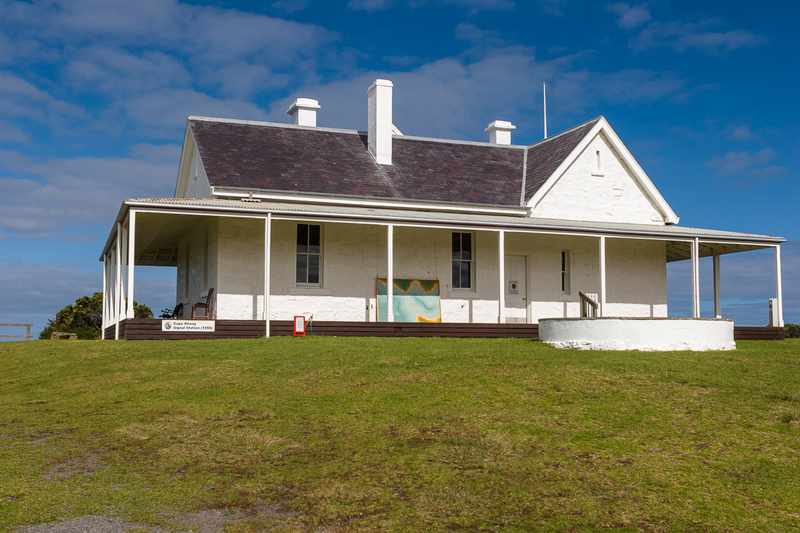
Fast enough to need a correction
The Herald report from January 1865 shows the less reassuring side of that speed. Its initial identification spread through the city before the later telegram corrected it. The report is evidence of information circulating and changing, not proof that Cape Otway’s equipment malfunctioned or that a particular operator was to blame. [1]
That distinction gives the surviving station a story beyond technological triumph or failure. A broken cable was one kind of problem. An incorrect identification was another. Neither can be understood simply by asking whether the electricity worked.
The building held a place in a chain: ships, shore signals, people interpreting what they saw, and messages sent onward. Its cable to Tasmania was only one part of that chain. Cape Otway could lose a connection beneath the sea and still help news overtake a vessel sailing on it.