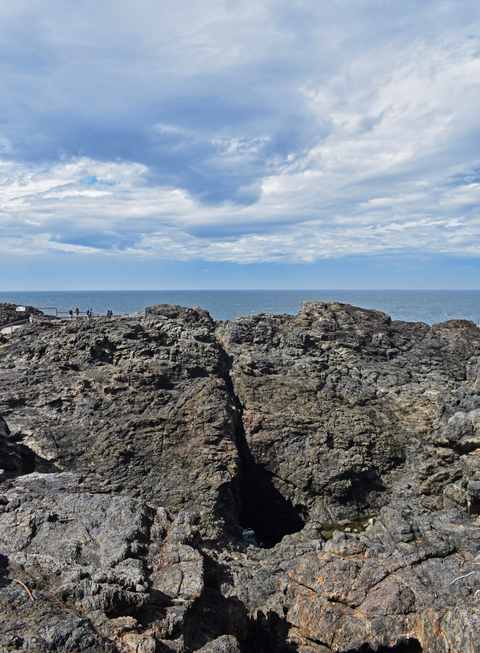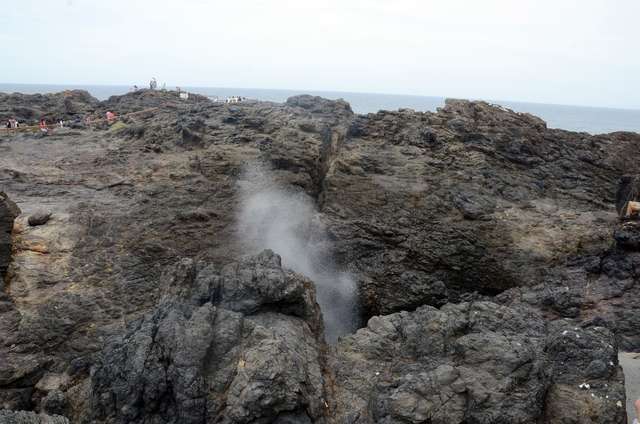
W. R. Browne went to Kiama’s Blowhole Flow in the mid-1920s to collect a rock for a magnetic test. The request had come from Paul L. Mercanton through geologist T. W. Edgeworth David. In 1926, Mercanton found the sample’s magnetization was reversed—opposite in polarity to today’s field.[1]
F. E. M. Lilley’s history of Australian National University research describes subsequent work on the New South Wales coast. Combined with records elsewhere, it revealed tens of millions of years during which Earth’s magnetic field retained reversed polarity. The interval was named Kiaman after the Kiama locality and later called a superchron. It was a division of time based on magnetism rather than fossils or the order of rock layers.[1]
Where is this place?
Kiama Blowhole, New South Wales. This map locates the town or region, not a verified exact historic event site.
The rocks did not settle every question about the interval’s boundaries. In a 2017 study, M. E. Belica and colleagues sampled the reverse-polarity Bumbo Latite in the southern Sydney Basin. They also detected normal polarity in three overlying lava units previously assigned to the Kiaman. The team proposed that the long non-reversing interval ended about 265 million years ago.[2]