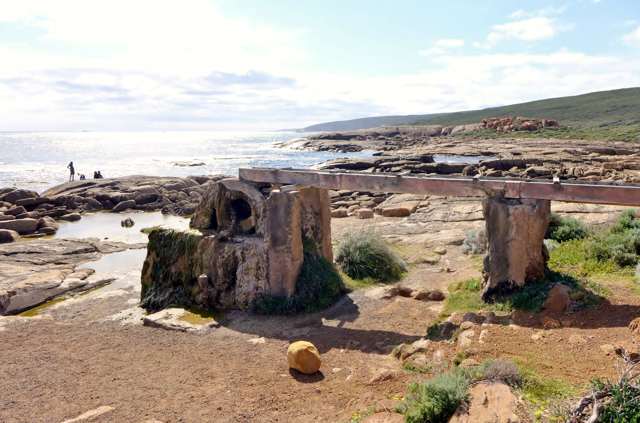
A pipeline installed at Cape Leeuwin in 1999 had a modest job: keep an old waterwheel wet. The Water Corporation and Department of Conservation and Land Management ran it directly from Leeuwin Spring to the timber channel feeding the wheel. According to the Heritage Council’s 2002 assessment, an earlier trickle-irrigation arrangement using a toilet block’s water supply had provided too little water. [1]
The wheel had been built in 1895 to help supply the nearby lighthouse keepers’ quarters. An oil engine assisted pumping from the mid-1920s, and later equipment bypassed the wheel altogether. In 1978, the quarters and lighthouse joined Augusta’s town supply, drawing from the same spring. [2]
Where is this place?
Cape Leeuwin Waterwheel, Western Australia. This map locates the town or region, not a verified exact historic event site.
For the timber left behind, drying brought damage. The 2002 assessment described lime deposits that had immobilised the wheel but also protected its wood. As flow declined, deposits flaked away and exposed timber to weathering. Conservation staff and the local business association replaced sections of the flume—the wooden channel—and extended it to obtain more flow, before the unsuccessful trickle system and the separate spring pipeline. [1]
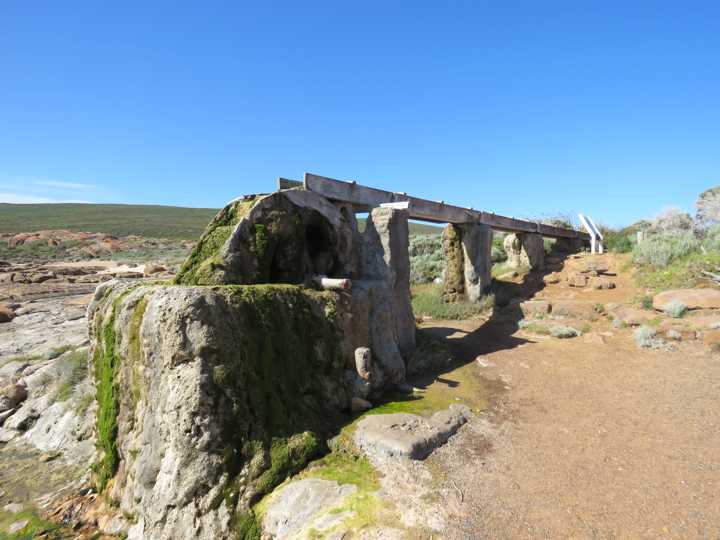
The parks department’s 2015 management plan added another consideration. Wetlands near Quarry Bay supported the Cape Leeuwin freshwater snail, whose habitat depended on permanently moist conditions and stable flows. The plan’s heritage section specifically directed anyone restoring the waterwheel to consider protecting the snail. [3]