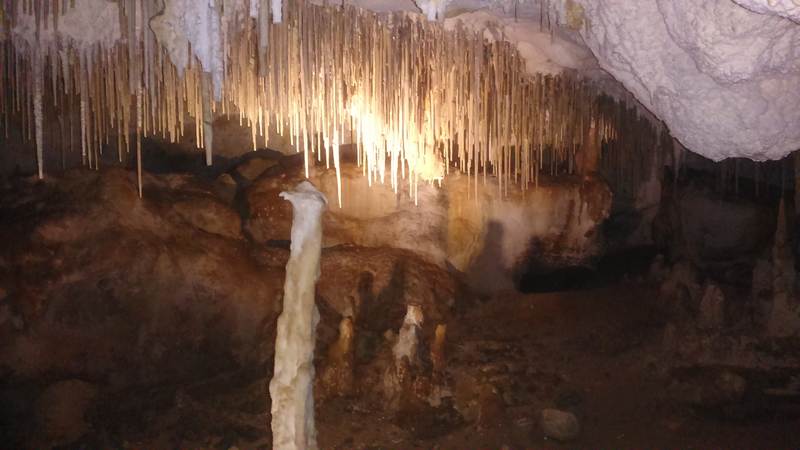
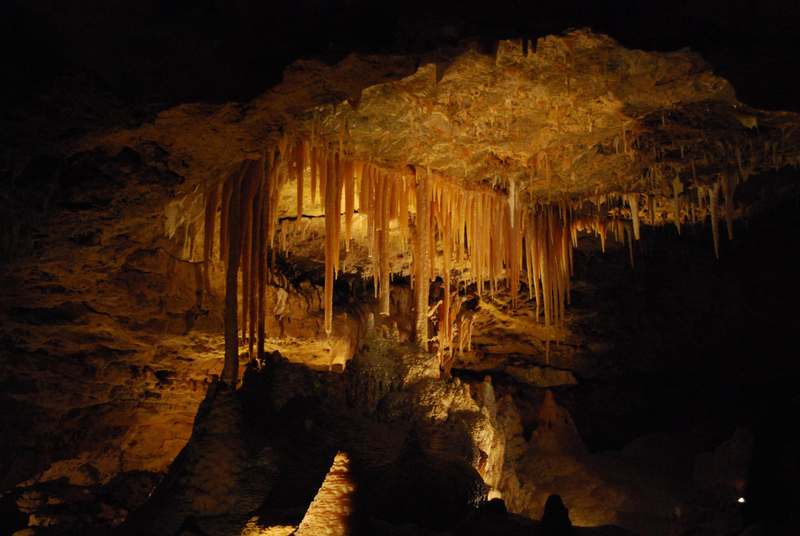
Rieneke Weij and her colleagues collected only formations that were already broken. Working under permits in ten caves of South Australia’s Naracoorte complex, they sampled fragments of stalagmites, stalactites and flowstone for a study published in 2022. The choice spared standing formations. [1]
The caves were already famous for bones. In Victoria Fossil Cave, Grant Gartrell and palaeontologist Rod Wells reached a concealed passage leading to the Fossil Chamber; the park dates its discovery to 1969. The Australian Museum describes how sediment and animal remains had entered through a ceiling opening, building a cone-shaped deposit. Frogs, wallabies and much larger extinct marsupials were among the animals represented. [2][3]
Where is this place?
Naracoorte, South Australia — regional orientation, not a cave entrance. This map locates the town or region, not a verified exact historic event site.
The broken mineral formations carried a different chronology. An Alexandra Cave stalagmite sample dated to 1.34 million years, with an uncertainty of about 40,000 years. That established a minimum age for cave development, not an age for the animal bones. Charcoal and pollen in dated fragments supplied another clue: their appearance from around 600,000 years ago suggested openings that admitted material from outside. [1]
The team inferred more extensive opening after about 250,000 years, when many samples contained much more charcoal and pollen. Their interpretation concerned airflow through a changing cave system, rather than one entrance opening on a single date. Old fragments containing these particles could help researchers choose where to search for older fossil deposits. [1]